Home>Services>Water Softener & Filtration
Softeners and filtersWhite scale on every faucet? Water softener and filtration for Avondale homes: softeners, whole-house filters and reverse osmosis
White crust is building up around your faucets, the glass in the dishwasher comes out spotted, and the shower head sputters. That is hard water doing its slow work. Our dispatch line sends your call to a plumber who can install a softener, add a filter, fit a reverse osmosis tap or repair the unit you already own. Call (623) 323-3182 and describe what you see at the fixtures.
Most people notice the problem on glass first. A cloudy film stays on the cups after every wash cycle. Next comes a rough white ring at the base of the kitchen faucet, then a bathroom showerhead that sprays sideways.
Avondale tap water is hard, so this is a common pattern here. The harder question is which fix matches your complaint. A softener, a whole-house filter and a reverse osmosis tap solve three different things, and buying the wrong one wastes a weekend. The sections below help you sort that out before a plumber arrives.
Is it hard water, and how do you test it?
Hard water carries dissolved minerals that stay behind when water dries or heats. You see the leftovers as scale. The quickest check is a look at the places where water sits or gets hot: the kettle, the shower glass, the aerator at the end of each faucet.
For a firmer answer, use a store-bought test strip or send a sample to a water lab. Write down the reading, then show it to the plumber. The number tells them how large a softener needs to be, so a guess leads to a unit that is too small and runs out of capacity early.
- Chalky white crust on faucets, shower heads and around drains
- Spots and film on glasses, dishes and shower doors
- Soap that will not lather and leaves a slick layer on skin
- Laundry that feels stiff and dull after a normal wash
- Low flow from a shower head or an aerator that keeps clogging
- Scale chips in the water heater when you drain it
What the City says about the supply
The City publishes a water quality report for its system, and it describes Avondale water as hard. The practical result is scale inside water heaters, tankless units and fixtures. Ask the plumber about flushing your heater and about treatment, since both slow the buildup.
Sources: Water quality report published by the City. Checked 2026-10-30.
If scale has already clogged a water heater, read about the water heater repair page before the next flush. Tankless owners should also look at tankless descaling and service, because those heat exchangers collect scale quickly.
Softener, filter or reverse osmosis: which one fixes your complaint?
Water treatment is a loose term, and it covers several different machines. Conditioning means changing how minerals behave in your pipes. Filtering means catching particles or chemicals. Each one has a job, and none of them does every job.
Match the machine to the symptom. Scale and spots point to a softener. A chlorine taste or sediment points to a filter. Drinking water you want polished at one tap points to reverse osmosis.
| System | Handles | Does not handle | Where it connects |
|---|---|---|---|
| Water softener | Scale, spotting, stiff laundry, mineral buildup in heaters | Taste, chlorine, sediment, bacteria | At the main line, treating the whole house |
| Whole-house filter | Sediment, chlorine taste, cloudy water at every tap | Hardness minerals | At the main line, before the branches split |
| Reverse osmosis | Dissolved solids and taste at the drinking tap | Whole-house scale, since it serves one faucet | Under the kitchen sink, with its own faucet |
A softener makes water gentler on pipes and fixtures. It does not make water purer to drink, and it adds a little sodium. If you follow a low-sodium diet, ask your doctor before choosing drinking water from a softened line.
Whole-house water filtration for every tap
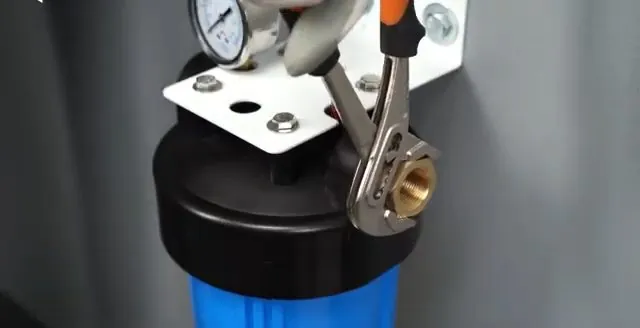
A whole-house filter sits on the main line and treats water before it reaches any branch. It suits you if the shower smells of chlorine, the toilet tank collects grit, or the washing machine inlet screens keep clogging. Those symptoms mean sediment or taste, not hardness.
The plumber looks at the main line, finds room for the housings, and checks that the incoming pipe can take a fitting without strain. They will also ask how many people use the water and how much gets used at once, because a filter that is too small slows the whole house at peak times.
Ask which cartridge the system takes and how often it changes. A sediment cartridge swaps out in minutes and is easy to forget. Set a reminder when it goes in. You may also hear about a whole house RO system, a much larger and less common setup, and it is worth asking the plumber whether it makes sense for your home at all.
Add a reverse osmosis system to the kitchen sink
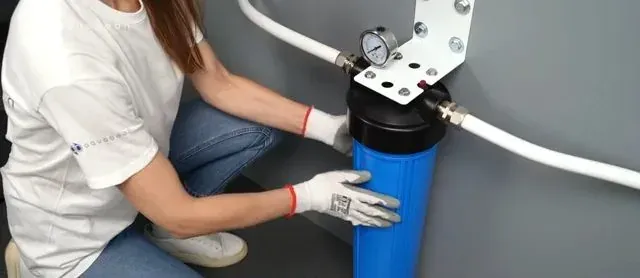
You want cleaner water for drinking and cooking, but not for the whole house. A reverse osmosis unit under the sink does that. It pushes water through a fine membrane, stores it in a small tank and sends it to a separate faucet on the counter.
Before the visit, clear the cabinet under the sink and check where a second hole in the countertop or sink deck could go. Stone and thick solid tops are harder to drill, so tell the dispatcher what yours is made of. A plumber may also need a drain saddle on the sink drain for the membrane waste line.
Expect the plumber to explain the filter stages, the membrane life and the tank pressure. Ask what the unit sends down the drain and how often the first filter stage needs a swap. If you want the unit to feed a refrigerator, mention that on the call.
Under-sink filters and the ice maker line in Avondale
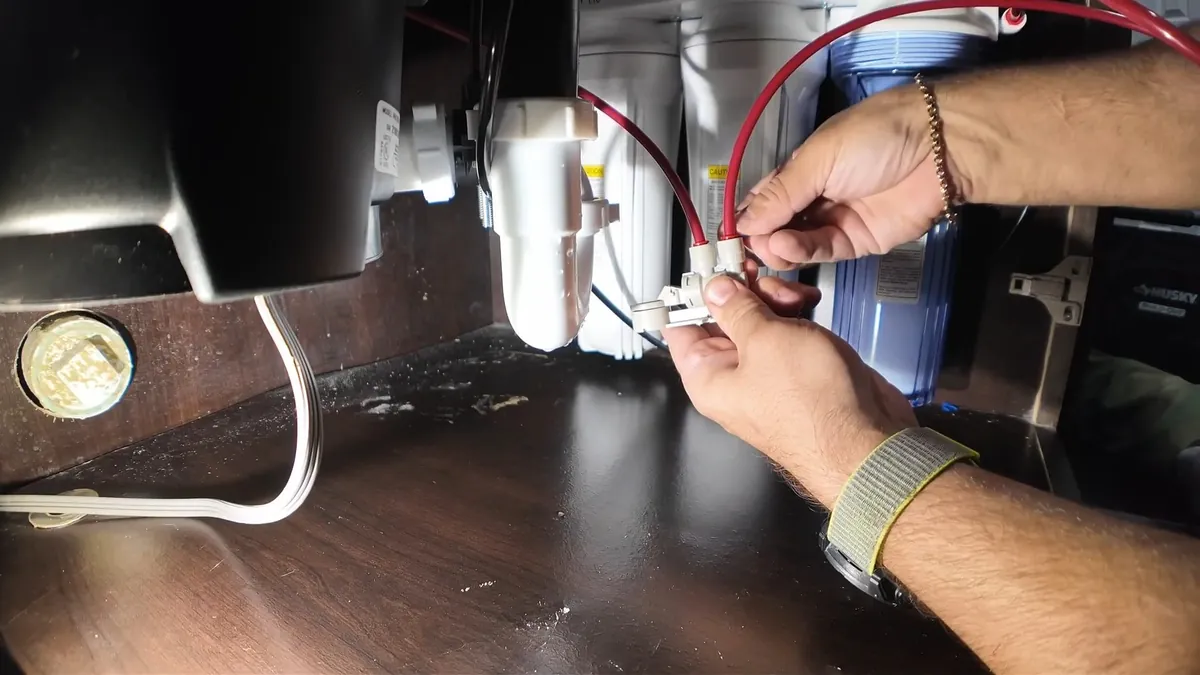
Not every kitchen needs reverse osmosis. A simple carbon filter under the sink improves taste and clears chlorine at one faucet, with much less hardware. A sediment water filter on the supply to a refrigerator or ice maker protects the little valve and the ice from grit.
If your ice tastes flat or the ice maker slows down, the fridge filter may be spent. If the fridge has a built-in cartridge, the plumber can show you how it ties to the supply line. When the shutoff valve itself leaks or sticks, that is a job for shut-off valve repair rather than a new filter.
Install a water softener: placement, drain and power
A softener needs three things nearby: the main water line, a drain it can empty into, and an outlet. A garage wall beside the main shutoff is the usual spot. The plumber tees into the line, adds a bypass so you can isolate the unit, and runs a drain hose for the cleaning cycle.
If you already bought the tank and valve, say so on the call. The plumber can inspect the parts before setting them up, since a valve cracked in a move will leak on the first day. Say the model, and ask whether anything needs replacing before the install starts.
Water softener salt delivery is a separate question from the install, but plan for it now. The tank is topped up with salt every so often, and a heavy bag has to go somewhere. Pick a spot you can reach without lifting over a car bumper.
Brine is the salty water the unit rinses out during regeneration, and it leaves through the drain hose. The City pages on its pretreatment program do not mention softeners or brine, but that only reflects those pages, not a final answer. Ask the plumber and the City before you decide where the drain line goes.
Describe the setup
Tell the dispatcher what you own, where it is, and whether it is new or old.
Clear the area
Make room around the main line, the outlet and the drain.
Ask about the drain
Have the plumber name where the cleaning water will go.
Check the license
Arizona requires a licensed contractor for larger jobs and for work that needs a permit. Look the license up on the Registrar of Contractors site the day you sign, and ask the dispatcher for the license details.
Which utility to call
Two utilities supply water here. The City's own water department covers most addresses, and Liberty Utilities handles water and sewer for a pocket of acreage in the northwest. Check your bill before you call about supply or street-side problems. The softener itself is inside your property line and belongs with a plumber.
Sources: City of Avondale 311; City of Avondale pretreatment program. Checked 2026-10-30.
Avondale softener repair, service or replacement
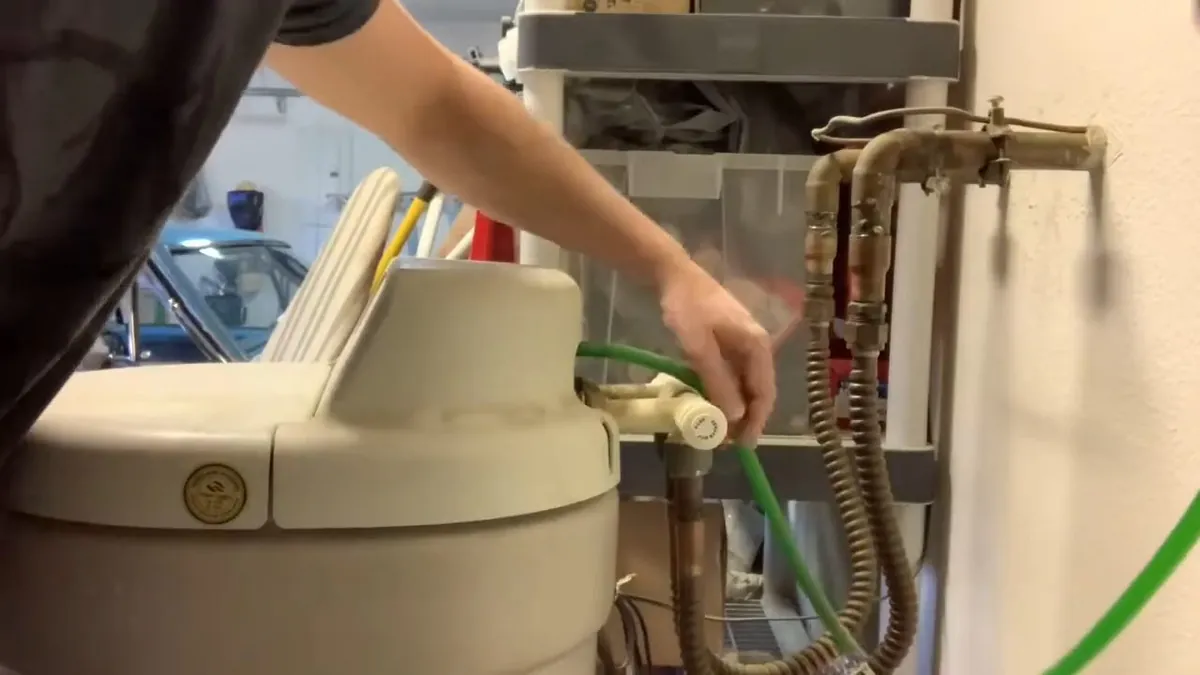
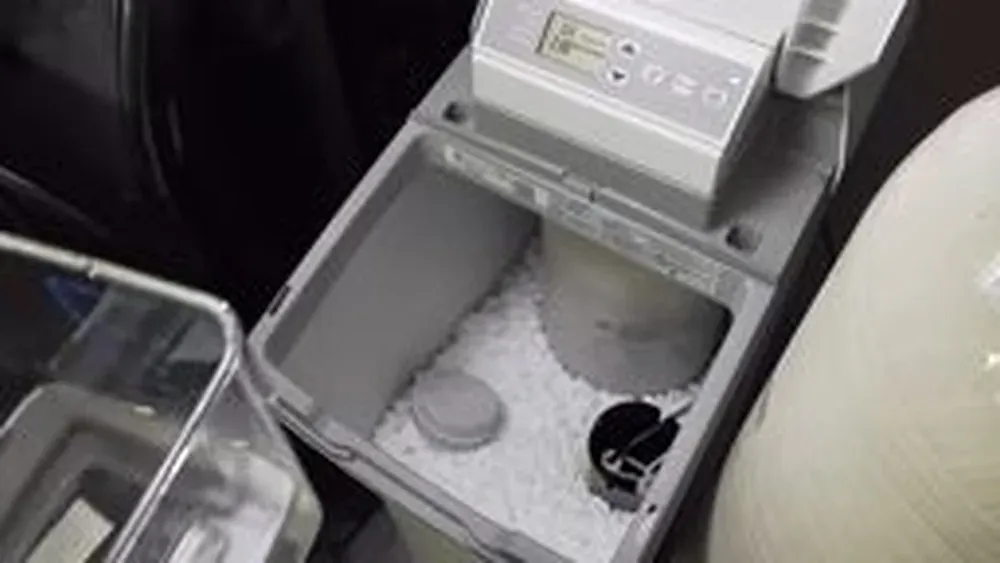
A softener that has gone quiet is not always broken. Check the salt level first, because a tank without salt cannot soften anything. Look for a salt bridge, a hard crust that leaves an empty space below it. A control head with a blank screen may only need power restored after an outage or a storm.
Call a plumber when the unit leaks, runs the cleaning cycle all the time, or sends hard water through after you have refilled the salt. Also call if a hose came loose, a valve was damaged in a move, or the drain line was cut during construction. A lightning strike can scramble a control board.
Fixing the unit is reasonable if a single part died and the tank is sound. Replacement makes sense when the tank is corroded, parts are no longer made, or repairs keep coming back. Ask the plumber for both options in plain terms. Ask too whether a filter change on the softener is the real fix.
More detail on service visits
What should you have ready for a service call?
Gather the brand, the age if you know it, and a photo of the control head. Note what the display shows and when the problem began. Mention whether anyone moved, bumped or rewired the unit lately.
What if the unit is a water conditioner or a self-regenerating model?
Tell the dispatcher the brand name printed on the control head. Conditioners, softeners and soft water systems are close relatives, and a plumber can tell which one you have once they see the valve.
Can you stop a softener leak before the plumber arrives?
Yes. Turn the unit's bypass if you know where it is, or close the main shutoff, and mop the floor. Do not open the control head or the brine tank lid to chase the leak.
For what influences the final bill on this kind of work, see the cost guide.
How often does a softener use salt, and where does the brine go?
Check the brine tank on a regular schedule and top it up before it runs low, because the unit needs salt to clean its resin. During each cleaning cycle the unit flushes salty water out through its drain hose. No softener rule showed up in the City pages reviewed, which is not proof that none applies. Ask your plumber or the City where the line may run.
What do you do when the fridge valve or the softener overflows?
Stop the water first, then call. 1. Close the shutoff valve for that line, or the main shutoff if you cannot find it. 2. Unplug nothing wet and keep your hands out of standing water near outlets. 3. Mop and fan the area. 4. Photograph the source, then describe it to the dispatcher. Never open a control head to hunt the leak yourself.
What is water conditioning, and do you need it?
Water conditioning is a catch-all for devices that change how water behaves in your pipes. What can wait: reading a label and booking a visit. What cannot wait: an active leak or a unit that floods its drain. A plumber can tell you whether a softener, a filter or nothing at all fits what you see at the fixtures.
How do you know if hard water is behind the spots on your glass?
Start with what you can see. Cloudy spots that return after every wash, crust on faucets and a thin film on the shower door usually point to minerals. Causes can include a dishwasher problem, too little rinse aid or old detergent. A test strip separates those from hardness, and a plumber can read it with you before you buy equipment.
Talk to a plumber about your water
Call (623) 323-3182 and tell the dispatcher what you see at the faucets or the softener. A plumber will take it from there. Questions about the job itself can go through the dispatch contact details.
Call (623) 323-3182