
Home>Services>Leak Detection & Repair
Leak detection and repairHidden water leak? Leak detection and repair from a plumber serving Avondale, AZ
Your water bill keeps climbing, a ceiling stain is spreading, or the meter keeps moving after every tap is off. Any of these can mean a plumbing leak you cannot see. Call (623) 323-3182 and our dispatch line routes you to a plumber serving Avondale who can pinpoint the leak and repair it. Start with the meter test below so you can tell the plumber exactly what you found.
now
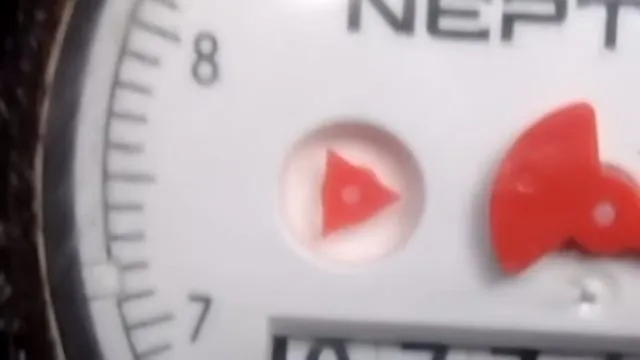
Leak detection is the work of locating water that escapes from a pressurized pipe, a drain, a fixture or a pool, before anyone opens a wall or digs a trench. Leak repair is the fix that follows once the exact spot is known. Homeowners, landlords and anyone buying or selling a house need leak detection and repair when water goes missing and the source is not obvious.
This page covers both halves, from a drip under a sink to a hidden water leak in a wall, a slab, the yard or a pool. It starts with the one check you can do yourself. Then it explains how plumbers find a leak, who owns which section of line, and what to ask for before work starts.
Leaks do not wait. A small drip soaks drywall, feeds mold and keeps a meter turning day and night. Catch small leaks early and the repair stays small.
Is it a leak or just normal water use?
A high water bill does not always mean a broken pipe. The City attributes most high bills to summer outdoor watering, so a rise in your Avondale water bill may only be sprinklers running longer. If nothing outdoors explains the jump, a meter test settles the question in a few minutes with nothing more than a pencil and a flashlight.
| What you notice | What it usually points to |
|---|---|
| Meter moves with every fixture off | A leak somewhere after the meter, inside or outside the house |
| Bill climbs while habits stay the same | A slow leak, a running toilet or an irrigation zone stuck on |
| Toilet refills on its own | A worn flapper or fill valve letting water slip into the bowl |
| Water running audibly at night | A supply line leaking under pressure |
| Warm patch on the floor | A hot water line leaking beneath the surface |
Run the test once, with every fixture off, and write the numbers down. The plumber will want them.
Turn everything off
Close every faucet, stop the irrigation clock, and confirm that no toilet, washer, ice maker or softener is refilling.
Read the meter
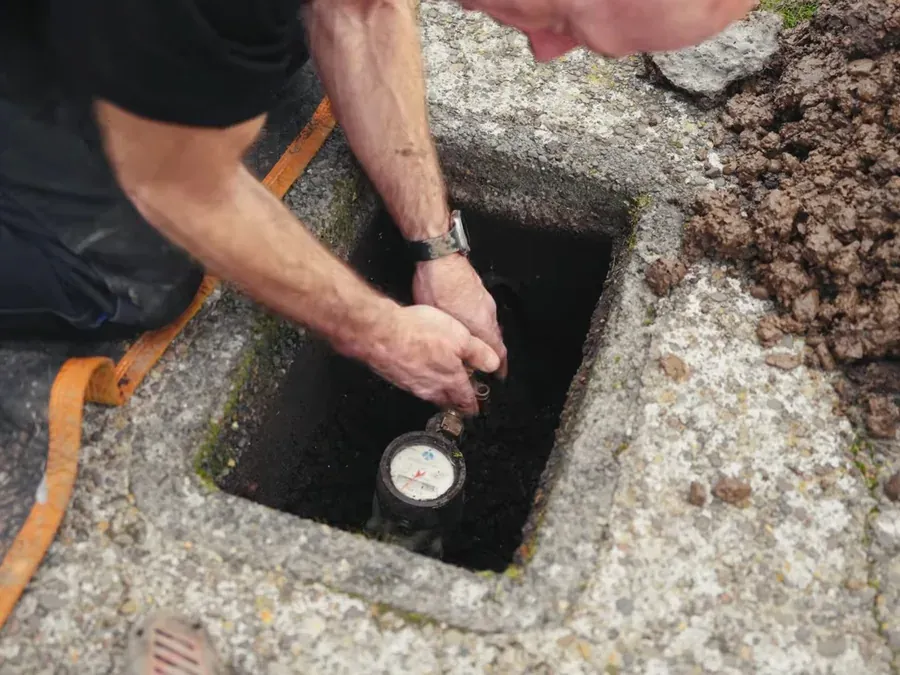
Open the meter lid and write down the full reading. Note whether the small low flow dial is turning.
Close the gate valve
Shut the gate valve, which is usually near the front yard spigot. Then wait a few minutes with the water off.
Read it again
Compare the new reading with the first. Movement after the valve is closed points to a leak between the meter and the house.
Read the other result
If the dial was turning before but stops once the valve is shut, the water is leaving on the house side, inside the home, under the floor or in the yard lines.
What the City suggests you check before calling
Avondale utility billing points owners to the usual suspects first: irrigation timers, faucets, evaporative coolers, water softeners and toilets. Only after those are ruled out does it describe the meter and gate valve routine above. A leak on the house side of the valve is a plumber job, not something to dig for yourself.
Sources: City of Avondale utility billing FAQ. Checked 2026-10-30.
Bill climbing or a stain you cannot explain? How plumbers find a hidden leak
Leak detection starts with the evidence, not a hammer. A plumber asks where the symptom shows up, checks your meter result, then narrows the search with tools. The goal is to find a hidden leak and mark one spot, so the repair means a single small opening instead of several guesses.
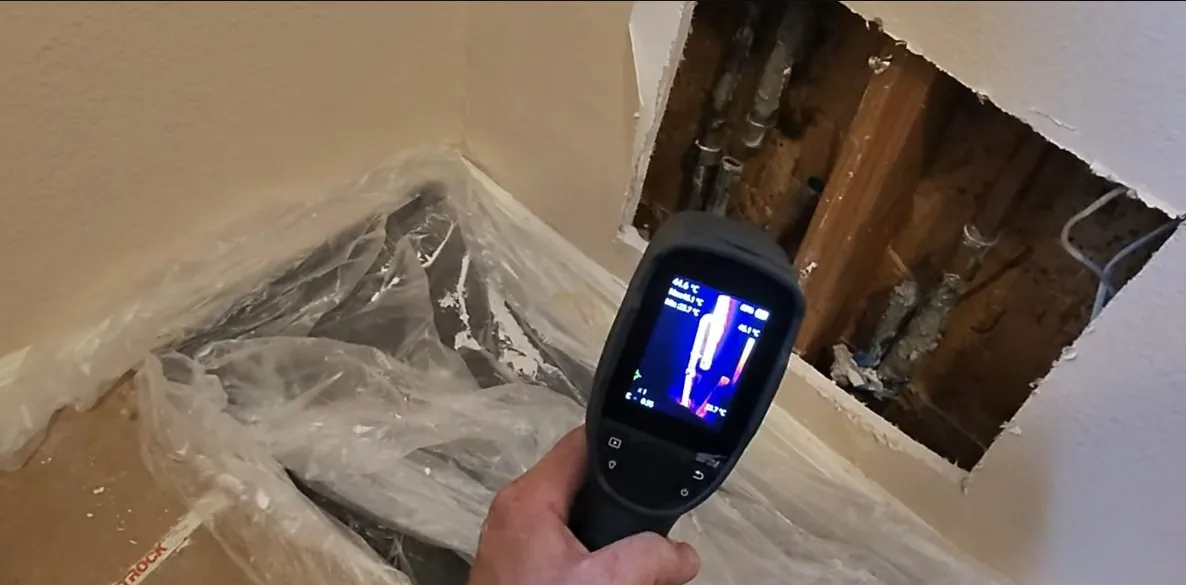
Electronic leak detection uses sensitive microphones on pipes and floors to hear the hiss of pressurized water. Infrared leak detection uses a thermal camera that shows cooler or warmer patches where water is moving through a wall, ceiling or floor. Neither tool sees water directly, so the plumber confirms the reading with a moisture meter and a pressure test before cutting anything.
Wall and ceiling leaks are the usual reason people call. Brown rings, bubbling paint, a musty smell or a soft spot all say the water travels farther than the stain. A plumber follows the moisture back to its source, so hidden wall leaks and the ceiling leak repair below them get handled as one job.
- A meter that keeps moving with every fixture off
- A bill that climbs while your habits stay the same
- Running water heard in a silent house
- Damp drywall, peeling paint or a stain that keeps growing
- Low pressure at one fixture or across the whole house
- A warm spot on the floor, or a wet patch in the yard
How each detection method works
Acoustic listening
Microphones and ground sensors pick up the sound of water escaping a pressurized pipe. The plumber moves along the suspected route and listens for the loudest point. It works well on metal pipe and on quiet days.
Thermal imaging
A thermal camera shows temperature differences on a surface. Water moving behind drywall or under flooring often leaves a cooler or warmer pattern. It points to where to look; it does not prove a leak by itself.
Pressure testing
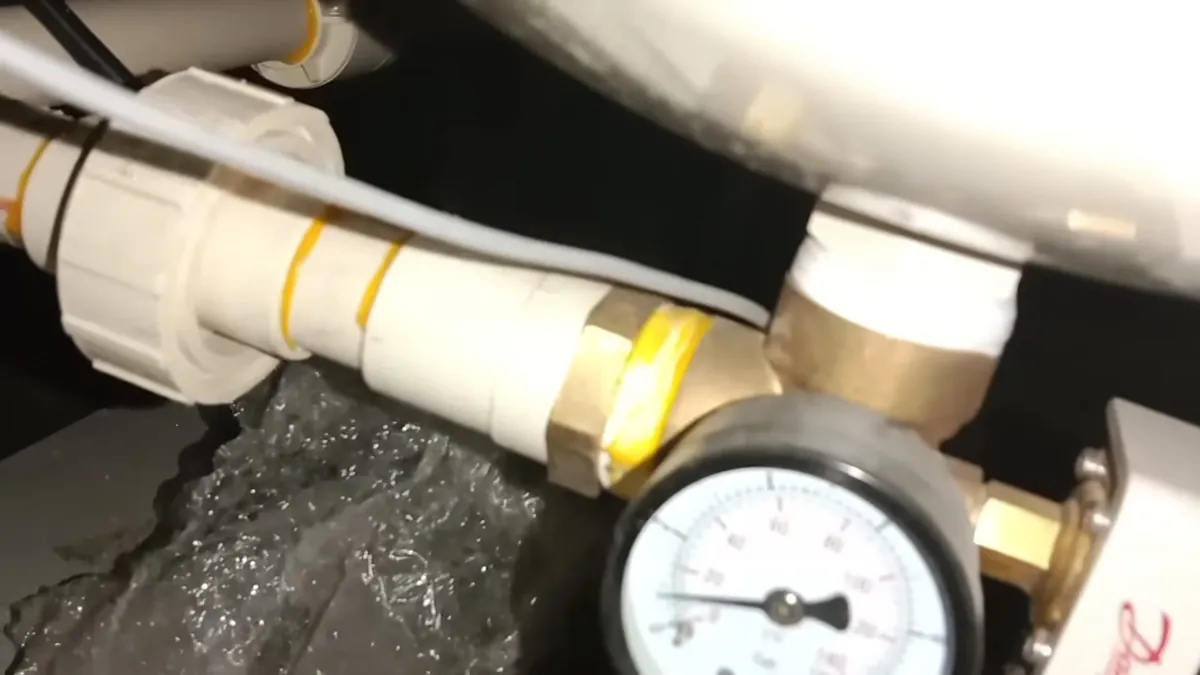
The plumber isolates a section of line, brings it up to a set pressure and watches a gauge. A falling gauge confirms a leak in that section, which lets the search shrink one segment at a time.
Camera inspection
A small camera on a flexible cable looks inside drain and sewer lines. It finds cracks, root intrusion and displaced joints that leave the soil or a cabinet floor wet.
Is the leak at a fixture, in a supply line, under the slab or in the yard?
Start with the easy places. A toilet that refills by itself, a faucet that drips after you shut it off, a shower arm that weeps at the wall and a hose under the sink are all fixture leaks. If you want a plumber for toilet leak problems, say whether the water is around the base or running into the bowl, because the fixes differ. A leaky faucet repair is often just a cartridge, washer or seal, and the faucet and fixture repair page covers those jobs.
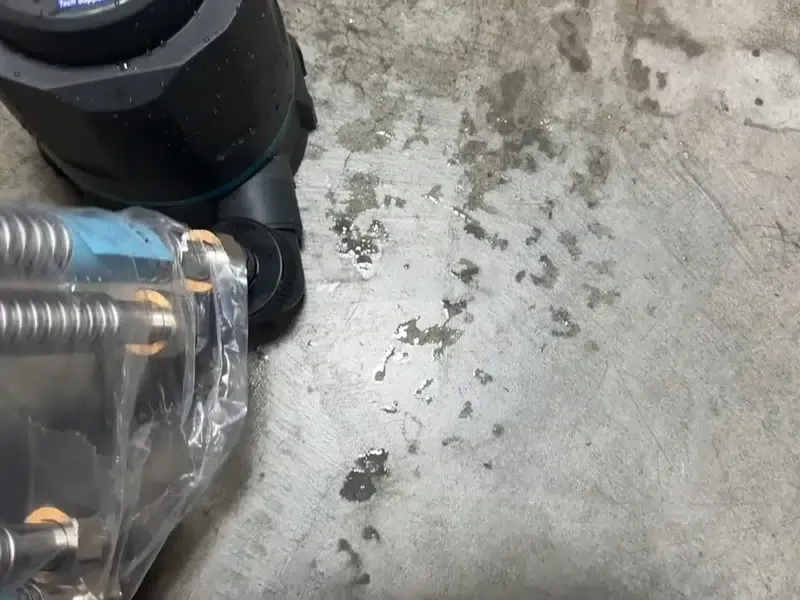
Appliances leak too. Washing machine hoses, dishwasher supply lines, an ice maker line and a water heater drain valve can each drip for weeks before the cabinet or floor shows it. Dry each connection with a paper towel, then watch for a fresh bead of water. Appliance leaks caught this way are usually a hose or clamp, not a pipe.
A leak in the yard or under a driveway is an underground leak, and underground pipe repair starts with locating the break, not digging. The plumber closes valves to narrow the run, listens along the line with an acoustic microphone and marks the spot at the surface. Helium or another tracer gas can confirm a stubborn spot, and an attic leak above a ceiling stain is checked from above before anyone cuts drywall.
Rising indoor humidity or a musty smell can be the first sign of a hidden leak, because moisture lingers in a wall cavity long after the dripping stops. Some owners add a smart leak sensor or an automatic shut-off valve after a repair, and the plumber can say whether one suits your plumbing.
A leak under the house in a crawlspace, or in a basement or foundation wall, is reached differently from one inside a wall cavity or beneath a slab, because the plumber can often see the pipe directly and trace the wet spot to its source.
| Location | Typical clue | What the plumber checks |
|---|---|---|
| Fixture or appliance | Wet cabinet floor, running toilet, dripping spout | Stop valves, supply lines, flapper, seals and cartridges |
| Inside a wall or ceiling | Stain, bubbling paint, musty smell | The supply or drain line behind or above the damage |
| Under a slab | Warm floor spot, meter moving, nothing visibly wet | Acoustic and thermal readings, then an isolation pressure test |
| Yard or irrigation | Soggy soil, a very fast running valve, a bright green strip | Zone valves, risers and the buried line |
| Crawlspace or basement | Damp insulation, wet joists, a musty smell | Overhead pipes as well as the floor below them |
| Between meter and house | Meter still moves with the gate valve closed | The service line running to the home |
When the meter runs and nothing inside is wet, the water may be traveling under the concrete. The slab leak repair page explains how plumbers locate and reach those leaks.
Outdoor lines leak quietly. A zone that runs very fast, a soggy patch beside a sprinkler head or a green strip along a pipe run usually means a broken riser or buried line, so leak detection for irrigation systems means running one zone at a time. If your home has a crawlspace or a basement, basement leak detection also means checking overhead pipes, not only the floor.
If water is dripping near a light fixture, outlet or panel, or a ceiling is bulging with water, stay out of that room. Call 911 for an electrical hazard or a ceiling that looks ready to fall, and let a qualified professional clear the danger before anyone repairs the pipe.
Is the leak on the City side or your side of the line?
The dividing line is the property line. Up to that line, water and sewer pipes in the street are the City's to maintain, and the owner answers for a break once the line is on the property. A leak your meter test places on the house side is yours to fix, so plan on a plumber.
Water bubbling up in the street or right at the property line is a different call. Report it to the City through 311 instead of hiring a repair. A plumber who finds the break on the street side will tell you the same, and that saves you a visit.
City line responsibility and line warranties
Street side problem: report it to the City at 311. Private side break: hire a plumber. The City also lists a voluntary third party water and sewer line warranty program from Service Line Warranties of America. It is not a City program, and the mailers about it are not City bills. Check whether you hold one before paying out of pocket.
Sources: City of Avondale 311, line responsibility; City of Avondale, line warranties. Checked 2026-10-30.
If the break is on a long run of buried pipe between the street and the house, ask the plumber whether a patch or a full new line makes more sense. The water line replacement page walks through that choice.
Who repairs an emergency water leak, and should you call now or wait?
Once the spot is marked, leak repair is usually a short job. The plumber replaces the failed section, fitting or fixture part, then restores the opening. Emergency water leak repair adds one step at the start: stopping the water, so ask the plumber to isolate the failing section before anything else.
When you call, a dispatcher takes the details and passes the job to a plumber who covers Avondale. Ask about a same day arrival if water is actively damaging the home. Tell the dispatcher what the meter did during your test, because that shortens the diagnosis.
| Situation | Timing | Safe step meanwhile |
|---|---|---|
| Water pouring from a pipe that will not stop | Call now | Close the main shutoff valve |
| Ceiling sagging or water near outlets | Call now, and 911 for an electrical or structural danger | Stay out of the room |
| Meter keeps spinning with the gate valve closed | Call today | Keep water use to a minimum |
| Slow drip at a faucet or toilet | A scheduled visit is fine | Close that fixture's stop valve |
| Pool level dropping slowly | A scheduled visit is fine | Run the bucket test |
Find your main shutoff valve before you need it. Turning it clockwise to close stops most leaks while you wait for the plumber.
Repaired lines get tested. Hydrostatic plumbing testing holds water in an isolated line at a set pressure while a gauge is watched. A steady gauge means the repair holds, and a falling gauge means another leak is hiding. Pipe leak repair on a line that has failed in several places is a different conversation, and the repiping and pipe repair page covers when replacement beats patching.
Wet drywall and carpet need drying once the pipe is fixed, and appliance leak cleanup is no different. The water damage cleanup page covers that step.
What should the plumber document, and what should you ask for?
A leak found without a record is hard to prove later to an insurer, a landlord, a buyer or the City. Ask the plumber to document the leak location with photos and a note of the pipe or fixture involved. A marked spot on the floor or wall also helps the repair and anyone who opens it later.
A plumbing inspection or pipe condition check is a sensible add on when one leak turns up. The plumber looks at shutoff valves, visible supply lines, water heater connections and hose bibs, and notes anything near failure. Ask for that note in writing, especially if the house is going on the market.
Before the visit, check for visible leaks under sinks, behind the toilet and around the water heater. Photograph anything you find with the date, and keep your meter readings. That gives the plumber a leak history to work from.
- The exact location of the leak, marked and photographed
- The method used to find it, such as acoustic, thermal or pressure testing
- The pipe material and its condition around the break
- Whether other sections of pipe look likely to fail next
- What the repair will disturb: walls, floors, landscaping or deck
- A written scope of work before anything is cut open
Is your pool leaking or just losing water to evaporation?
A pool loses some water every day, so a lower level does not prove a leak. What matters is whether it drops more than evaporation explains. Evaporation runs faster on hot, dry, windy days and slows when it is cool and still, while a leak keeps pulling water down even on a calm day.
An automatic pool filler can hide the problem, because it tops the pool up quietly and the leak only shows on your water bill. The City suggests turning the filler off now and then and watching whether the level falls more than evaporation would explain.
Mesa, Arizona publishes a simple bucket test, and that is Mesa guidance, not an Avondale rule. Set a bucket of pool water on a step, mark both levels, and compare them after two to three days. If the pool drops more than the bucket, water is leaving through the plumbing or the shell.
Swimming pool leak detection separates a plumbing leak from evaporation by testing the pool lines and, if needed, the pool shell, so ask the plumber which of the two they are checking.
| What you check | Points to evaporation | Points to a leak |
|---|---|---|
| Pace of loss | Small and steady, faster on hot, windy days | Similar loss on cool, still days |
| Bucket comparison | Pool and bucket drop about the same amount | The pool drops more than the bucket |
| Pump on or off | Loss looks the same either way | Loss changes or stops when the pump is off |
| Ground around the pool and equipment | Dry soil and firm pavers | Soggy soil, sunk pavers or a wet equipment pad |
| Automatic filler | Runs seldom | Runs more often than it used to |
Pool leak detection by a plumber focuses on the pipes, not the shell. The plumber isolates the suction, return and fill lines, pressure tests each one, then checks the equipment pad, valves and fittings for drips. Repair on a failed line can mean opening the deck, so ask what will be disturbed first. A cracked shell or torn surface is pool builder work, and a plumber can tell you when that is the case.
Timing affects your sewer charge. The City sets it from water use in the prior December, January and February, so a pool refill or leak in those months calls for a sewer adjustment form. Ask the City about it after the repair.
For what drives the cost of finding and fixing a leak, see the cost guide.
How do I find a hidden water leak in my house?
Run the meter test first, because it tells you whether water is moving at all. Turn every fixture off, read the meter, close the gate valve and read again. If the meter moves, put a few drops of food coloring in each toilet tank, look for wet spots on walls and ceilings, and walk the yard for soggy ground. Then call a plumber, since pinpointing a pipe inside a wall or slab takes acoustic and thermal tools.
Why does my shower pipe leak at the wall?
Water at the wall around a shower arm or valve usually means the connection was never sealed properly. A cross threaded fitting leaks because the threads cannot seat, even when tightened hard, and worn thread tape or a cracked fitting behind the wall can do the same. Stop using that shower, do not keep forcing the fitting, and have a plumber check whether the wall must be opened to replace it.
Do I need emergency leak service or can I wait for a regular visit?
Choose emergency service when water cannot be stopped, a ceiling is sagging, water is near electrical parts or the meter keeps spinning after the gate valve is closed. Choose a scheduled visit when closing the fixture's stop valve ends the drip, as with a slow faucet or toilet leak. Either way, close the main or the fixture valve first, and tell the dispatcher what your meter test showed.
Who fixes a leaking pipe once the leak is located?
A plumber repairs it, and the method depends on where the pipe leaks. A pinhole or loose fitting is often a small repair, while a long damaged run may be replaced, and a line under a slab or in the yard may be rerouted instead of dug up. Ask the plumber to explain which option fits the pipe's age and condition, and to test the line before any wall or floor is closed.
Ready to track down the leak?
Call (623) 323-3182 and describe what your meter did and where the water shows up. Dispatch will connect you with a plumber who serves Avondale.
Call (623) 323-3182