Home>Services>Garbage Disposal
Garbage disposalGarbage disposal repair and replacement for Avondale kitchens, from jams to leaks
The disposal hums but the blades will not turn, or water is dripping onto the cabinet floor under the sink. Call (623) 323-3182 and say what you hear and see. Dispatch routes the call to an independent plumber who handles garbage disposal service in Avondale, works out whether the unit is jammed, leaking or finished, and explains the choice between fixing and replacing before any work begins.
now
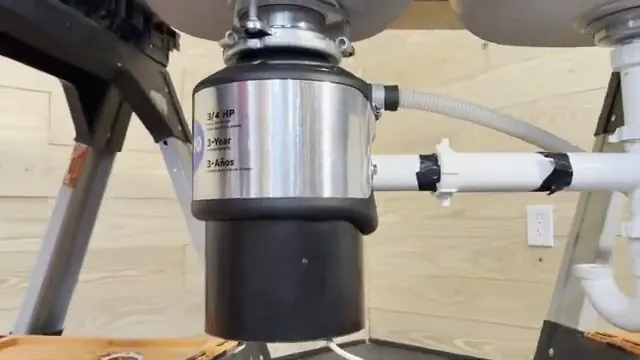
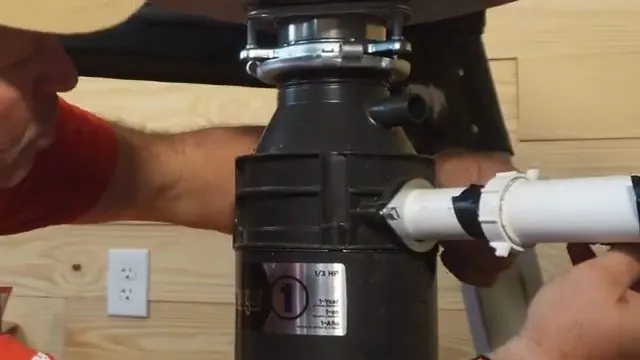
A garbage disposal is a small grinder bolted under the sink drain. It chops soft food scraps into pieces fine enough to wash down the drain line. You need a plumber when it hums without spinning, leaks into the cabinet, drains slowly, or when your sink has only a plain drain and you want a disposal fitted.
This page covers both jobs: repairing the unit you own and installing a new one. The call goes through dispatch, and the plumber assigned to your address phones you to agree on a time.
Plumbers on this site are independent, so whoever visits does the diagnosis and the work, and handles the paperwork too. Tell the dispatcher the brand if you can read it, whether a dishwasher drains through the same sink, and whether the unit plugs into an outlet or is wired in. Those details save a second trip.
Garbage disposal repair: is it a jam, a leak or a dead motor?
Start with the sound. A disposal that hums and does not turn is usually jammed, with a bone, a fruit pit or a bottle cap wedged against the spinning plate. Silence points to a tripped reset button, a dead outlet or a failed motor. A rattle while it spins means something loose is bouncing around in the chamber.
Each cause has a different repair, so naming the symptom accurately helps the plumber arrive with the right parts. A jam often needs only clearing and a reset. A burned out motor means a new unit. A leak means finding which seal or hose let go, which the next section walks through.
| What you notice | Usual cause | What the plumber does |
|---|---|---|
| Hums, blades will not turn | Hard object wedged against the spinning plate | Frees the plate from underneath, removes the object and tests the unit |
| Silent, no hum at all | Tripped reset button, dead outlet, faulty switch or failed motor | Checks power at the outlet and switch first, then the reset button, then the motor |
| Turns but the sink drains slowly | Ground waste packed in the chamber or a partial clog beyond the unit | Clears the chamber and the drain line past the trap, then runs water to confirm |
| Loud metallic rattle | Spoon, cap or other object inside | Retrieves the object and inspects the grinding parts for damage |
| Burning smell, then it quits | Motor overheated from repeated jams | Tests the motor and recommends a new unit if it stays dead |
Safe checks before the plumber arrives
- Switch the unit off at the wall, then unplug it under the sink. If it is wired in, turn off its breaker instead.
- Look at the bottom of the housing for a small red reset button. Wait a few minutes for the motor to cool, then press it once.
- Find the hex socket in the center of the underside. Fit the hex wrench that came with the unit, or a matching one, and rock it back and forth until the plate turns freely.
- Restore power, run cold water, and flip the switch for a second or two.
- If it hums again, trips the reset or leaks, stop and call. Repeating the cycle only heats the motor.
Do not reach into the chamber, even with the power off and the switch flipped. Use tongs or pliers from above only after the unit is unplugged or its breaker is off. A blade can move when you least expect it, so if you cannot see or reach the object safely, leave it for the plumber.
Where is the garbage disposal leaking from?
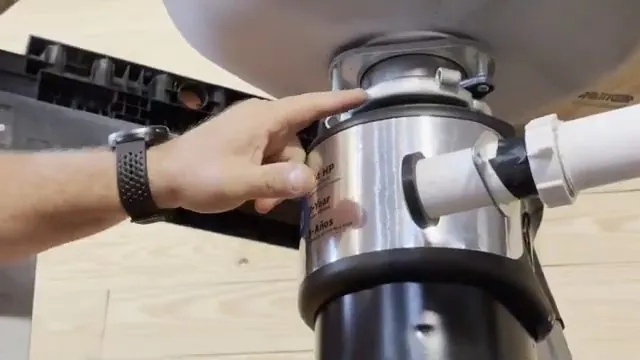
A garbage disposal leaking under the sink almost always comes from one of three places, and the location tells you what failed. Switch the unit off, dry the housing and the cabinet floor with a towel, then run water for a minute. Watch with a flashlight and note where the first drop forms.
The table below shows how that spot maps to the repair. Leaking disposals that weep from the bottom or the housing seam are rarely worth repairing, because the failed seal sits behind the motor. Flange and hose leaks are often fixed during one visit.
| Where the water appears | What failed | Typical outcome |
|---|---|---|
| Around the top ring where the unit meets the sink | The sealing putty or gasket under the sink flange, or a loose mounting ring | Plumber remounts the unit and reseals the flange |
| Along the side hose or its clamp | The dishwasher inlet hose, a worn clamp or a cracked rubber elbow | Plumber replaces the hose or clamp and retests with the dishwasher running |
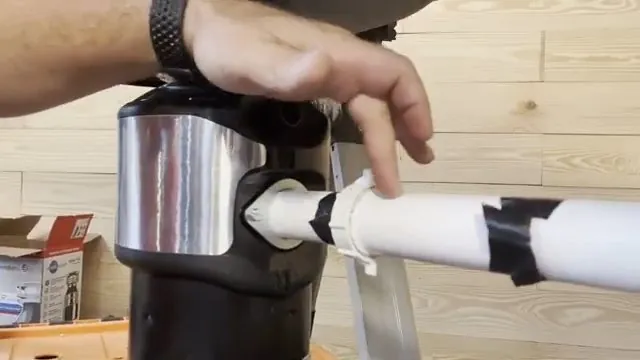
| Where the outlet meets the trap arm | A loose slip nut or a flattened washer | Plumber realigns the joint and replaces the washer |
| Underneath the housing or the reset button | The internal seal between the grinding chamber and the motor | Plumber advises replacing the whole unit |
If the cabinet floor stays wet after the disposal is ruled out, look at the faucet and its supply lines, which a plumber handles as faucet and fixture repair. Water that keeps appearing with every fixture off may be a hidden pipe problem, which is a job for hidden leak detection.
Repair or replace: when is a new disposal the better call?
Repair makes sense when the unit itself is sound and the fault is small: a jam, a loose flange, a worn hose, a reset button that holds. Replace it when the housing leaks, the motor stays dead after a power check, or the grinding parts are rusted through. A plumber can usually tell within a few minutes of testing.
Ask the plumber three things: what exactly failed, whether that part explains your symptom, and what else on the unit looks worn. A disposal that has been repaired twice is telling you something. If you already bought a replacement, give the dispatcher the brand and model so the plumber can check that it fits your sink and dishwasher inlet.
- Water seeps from the underside or the housing seam
- The motor stays silent after the reset and a confirmed power check
- Rust flakes or brown streaks appear in the grinding chamber
- The unit jams again and again with nothing visibly stuck
- Food no longer breaks down because the grinding parts are worn smooth
Avondale garbage disposal installation: which unit and which setup?
A garbage disposal plumber handles garbage disposal installation and repair in the same trade, so a first-time install, a swap and a reinstall under the sink are all routine. What matters is choosing a unit that matches how you cook and what the sink already has. The table covers the choices a plumber will ask about.
If your sink has no disposal and no switch, the job includes a power source, and electrical work can change who is allowed to do it. Arizona sets rules on that, which the panel below explains.
| Choice | What it means | Pick it when |
|---|---|---|
| Motor horsepower | Larger motors spin harder and jam less often | A smaller motor suits one or two people; pick a larger one for heavy family cooking |
| Continuous feed | Runs while the switch is on and you push scraps in | You want quick cleanup and no one reaches in while it runs |
| Batch feed | Runs only when a stopper lid sits in the drain | Small children live in the house or you want fewer accidents |
| Mounting style | How the unit locks to the sink flange | The plumber matches it to your sink; tell them if the old unit hangs low |
| Power connection | A cord into an outlet under the sink, or a wired connection | The cabinet already has an outlet; otherwise new wiring may be needed |
Check the license before you sign
State rules say a licensed contractor is needed when a job passes a dollar limit or requires a city permit. Adding a new circuit for a disposal can push the job over that line.
Search the plumber on the state contractor lookup the day you agree to proceed, since a status can lapse. If you are unsure, the dispatcher can hand you the license information.
Sources: Registrar of Contractors license check guidance. Checked 2026-10-30.
Does the dishwasher connection need attention when the disposal changes?
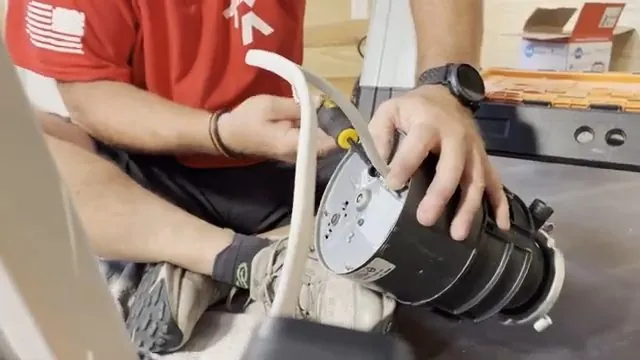
In many kitchens the dishwasher drains through the disposal. A hose runs from the dishwasher to a small inlet nipple on the side of the unit, and the dishwasher water leaves through the disposal outlet. A new unit ships with that inlet blocked by a plastic knockout plug. If the plug stays in, the dishwasher cannot drain and leaves dirty water in the tub.
If your sink has a plain drain instead, the dishwasher hose attaches to a branch on the tailpiece. That is ordinary dishwasher plumbing, and the same plumber handles it.
Power off, then knock out the plug
With the unit unplugged or its breaker off, the plumber taps the plug out from inside the inlet and removes the plastic disc so it cannot clog the line.
Attach the drain hose
The dishwasher hose clamps to the inlet and is routed in a high loop under the counter so sink water cannot run back toward the dishwasher.
Join the outlet to the trap
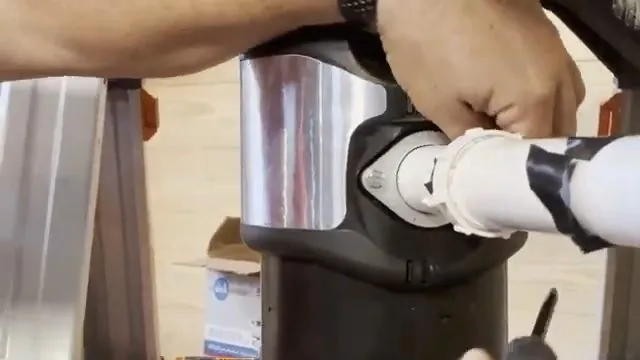
The discharge elbow bolts to the unit and meets the trap arm with a fresh washer, then the joint is hand checked for play.
Test with a full cycle
The plumber runs the dishwasher through a drain cycle and watches the clamp, the elbow and the cabinet floor for drips.
More on the dishwasher drain
Why did the dishwasher stop draining right after the swap?
The most common reason is the knockout plug still sitting in the new unit's inlet. The next suspect is a hose kinked behind the dishwasher or a clamp that was not tightened.
Should the old hose and clamps be reused?
Rubber hardens and cracks over the years, and an old clamp can lose its grip. The plumber looks at both while the unit is out and tells you whether replacing them is sensible.
What is an air gap and do I need one?
An air gap is a small fitting on the sink deck that breaks the connection between dishwasher drainage and the sink drain. Some installs use it and some use a high loop, so ask the plumber which setup your kitchen has.
What should never go down the garbage disposal?
Most repeat visits come from a short list of habits. A disposal grinds soft scraps well, but it is not a trash can, and what you feed it decides how often it jams or backs up. Run cold water before, during and for several seconds after each use so the ground waste travels past the trap.
Keep these out of the sink entirely:
- Cooking grease and oil, which cool into a coating inside the trap arm
- Coffee grounds in quantity, which pack into a dense paste
- Pasta, rice and bread, which swell with water and clog the line
- Potato peels and fibrous stalks such as celery or corn husks, which wrap around the grinding parts
- Fruit pits, bones and shells, which jam the plate
- Glass, metal, plastic and any non-food item
Chemical drain cleaners are a poor fix for a clogged disposal. They sit in a standing sink, attack the seals and can splash on you when the plumber opens the trap. Bailing the water out and calling is safer.
When does a backed up disposal mean a bigger drain problem?
A clog at the disposal usually stays at the disposal. The sink drains slowly or stands full while the rest of the house works normally. If the clog sits beyond the P-trap, the plumber clears it with a cable instead of a plunger, and the disposal itself may need no repair at all.
A backup that shows up in other drains is a different problem. Water rising in the dishwasher, gurgling in a nearby bathroom drain, or several fixtures draining badly at once all point to a drain or sewer line blockage downstream. Stop running water in the house and call.
Whose pipe is it?
Pipes in the street belong to the City of Avondale, and its responsibility stops at your property line. From that point inward, the homeowner owns any break or blockage.
If the fault is on your side, a plumber handles it, and hydro jetting and snaking is usually the first step. If the plumber traces it to the street side, call City 311 to report it.
Sources: Avondale 311 article on who owns which line. Checked 2026-10-30.
Tell the dispatcher which other drains are slow. That one detail helps decide whether the plumber brings a sink cable or a larger machine.
Figures for repair and installation jobs are kept on the plumbing cost guide.
Should I repair a leaking disposal or replace it?
Repair it when the leak is at the top flange, a hose or a trap joint, since those are seals and fittings outside the motor. Replace it when water comes from the underside or the housing seam, because the internal seal cannot be reached. A unit that is old, rusted or already repaired once also points toward replacement, even if the current leak is minor.
Why does my disposal hum and not turn?
A humming unit that does not turn is almost always jammed, because the motor has power but the plate cannot move. With the power off at the switch and the unit unplugged, a hex wrench in the bottom socket usually frees it. If it jams again straight away or the hum stays after a reset, stop and have a plumber test the motor.
What should I check before agreeing to a disposal job?
Look up the plumber's state license on the day you sign, since larger or permitted work requires one. Then ask what the visit covers: removing the old unit, mounting parts, the power connection and the dishwasher inlet. The dispatcher does not set figures, so the plumber confirms them once the sink has been inspected.
Do I need a plumber for garbage disposal repair?
Try the safe checks first. One, switch off the wall switch and unplug the unit or turn off its breaker. Two, press the red reset button on the underside. Three, rock a hex wrench in the bottom socket. Four, restore power and test briefly. Call a plumber if it still hums, trips, leaks or smells hot. Never put a hand in the chamber for any reason.
Ready to book the disposal visit?
Tell the dispatcher what the disposal does and what sits under your sink. Call (623) 323-3182 and the job goes to an independent plumber who covers Avondale.
Call (623) 323-3182