Home>Services>Water Line Repair & Replacement
Service line and main line workWet yard or a spinning meter? Water line repair and replacement for Avondale, AZ homes
Water pooling in the yard, a meter dial that keeps turning with every tap closed, or a shower that has lost its force can all trace back to the pipe between the street and your house. Call (623) 323-3182 and describe what you see. Our dispatch line routes your call to one of our plumbers serving Avondale, and the plumber can tell you what to check before anyone breaks ground.
now
When you call, the dispatcher asks where the water shows up, whether the meter moves with everything off, whether pressure has changed, and whether the pipe has been dug up before. Those answers sort the job into a yard line leak, a fixture problem or something on the street side. The plumber who takes the job is independent, and the dispatcher only matches you to one.
The sections below follow the same questions in the same order. They cover who owns each stretch of pipe, how to test the meter yourself, when a repair holds, when replacement makes sense and how pressure problems fit in. Read the parts that match your symptoms and skip the rest.
Service line and yard line: where does City responsibility end and yours begin?
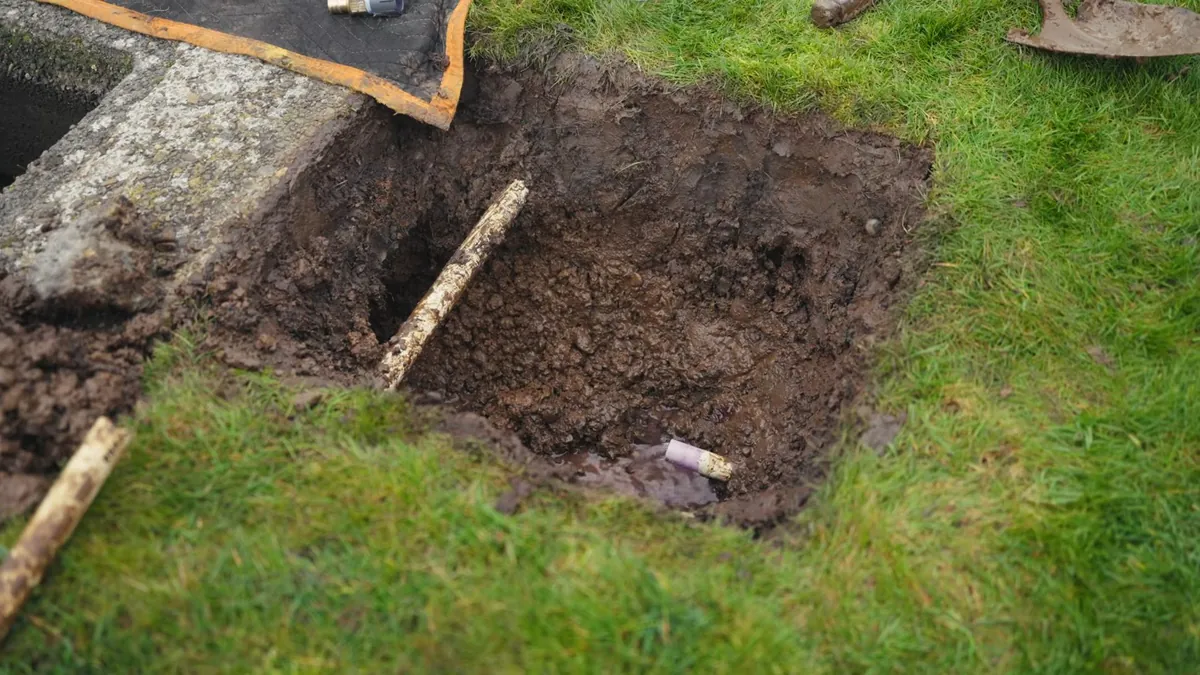
The service line is the pipe that carries water from the main in the street, past the meter, to your house. Plumbers call the part on your lot the yard line. A geyser in the street and a damp patch in your front lawn are different problems with different owners, so the first job is to place the water on the map.
Water main repair in the street is utility work, and a plumber cannot take it on. Once the pipe crosses onto your property, a break is yours to fix. That includes plumbing service line repair on the run to the house, and a sewer lateral is a separate line again, covered under a broken sewer line.
| Where the water appears | Who handles it | What you do first |
|---|---|---|
| In the street or at the property line | The City or the utility on your bill | Report it to the City through 311, or call the utility named on your bill |
| Anywhere on your lot, including the yard line | You, through a plumber | Note the spot, take a photo and call dispatch |
| Inside a wall, ceiling or under the floor | You, through a plumber | Close the house valve and call dispatch |
| You cannot tell which side it is on | Decided by a meter test | Run the test in the next section, then call |
Which utility sends your water bill?
City of Avondale Water Services supplies the majority of homes here, and a pocket of northwest acreage is on Liberty Utilities for both water and sewer. The name on your statement tells you which utility applies, and that is the number to call about supply problems or a break out in the street. The private side repair goes to a plumber either way.
Sources: City of Avondale 311 knowledge base article on line responsibility. Checked 2026-10-30.
Is the leak before or after the meter?
A wet spot near the meter box does not say whose pipe is failing. A meter test sorts it out with nothing more than a screwdriver for the lid and a few minutes of patience, and it gives the plumber a head start before arrival.
Stop all water use
Close every faucet and pause sprinklers, the washer and the dishwasher. Check that no toilet is running and that an evaporative cooler or water softener is not refilling.
Record the starting numbers
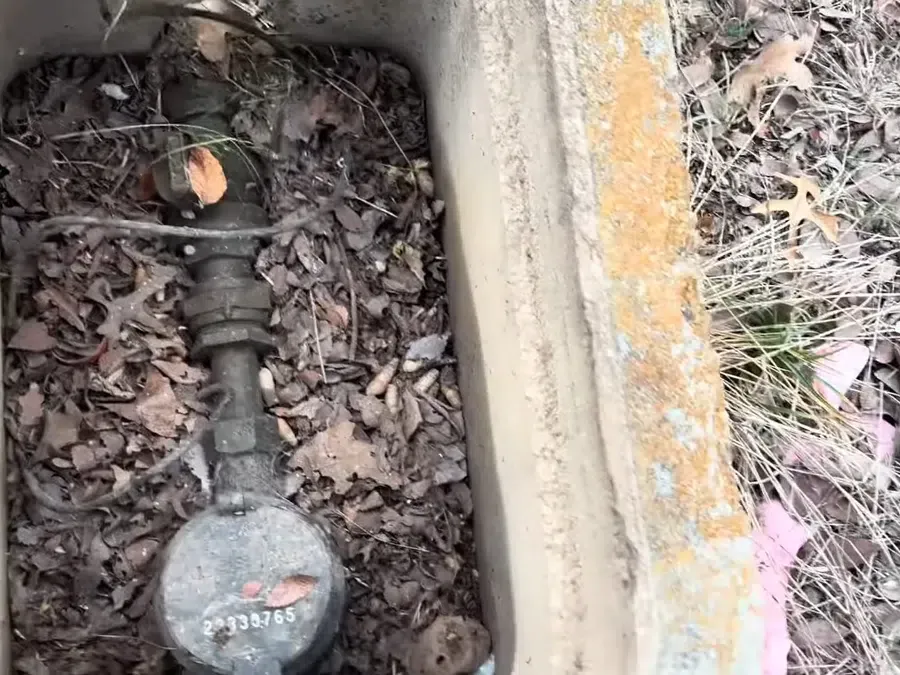
Lift the lid on the meter box, write down the numbers or dial position and note the time. A phone photo works well.
Close the house valve
Find the gate valve that feeds the house, often near the front-yard hose spigot, and turn it clockwise until it stops.
Compare after a short wait
If the numbers still move with the valve closed, water is escaping between the meter and the house. If they hold still, the loss is on the house side of the valve.
The test narrows a leak to a stretch of pipe. It does not give the exact spot, and it cannot see a leak in the street. If the valve will not turn, do not force it with a wrench, because old gate valves can snap. Tell the dispatcher and leave the water use stopped.
Give the dispatcher both readings and the time between them. That tells the plumber whether to bring a ground microphone for water line leak detection or head straight for the fixtures.
Soggy lawn, sunken soil or a meter that never rests: is a spot repair enough?
Yard service line leaks tend to show as a strip of lawn that stays wet in dry weather, soil that has dropped, or pressure that sags at every tap. Main line leaks, meaning a break in the pipe that feeds the whole house, can also keep the meter moving and push the water bill up with no change in how you live.
- One clean failure, such as a split coupling or a puncture from a stone or a shovel, in pipe that is otherwise sound.
- Pipe material that still bends or flexes without cracking when the plumber exposes it.
- A short, easy to reach section, so the trench stays small and the cut ends can be joined with a new fitting.
- Water that surfaces through concrete usually points to a slab leak instead, which is a different job.
Before digging, a plumber pins the spot down. A listening device picks up the hiss of escaping water on buried pipe, and pressure testing of plumbing lines does the rest: one section is isolated and pressurized, and a gauge that falls shows the leak sits inside it. For a leak you cannot place at all, leak detection explains the wider toolkit.
Replace the water line when patches stop holding
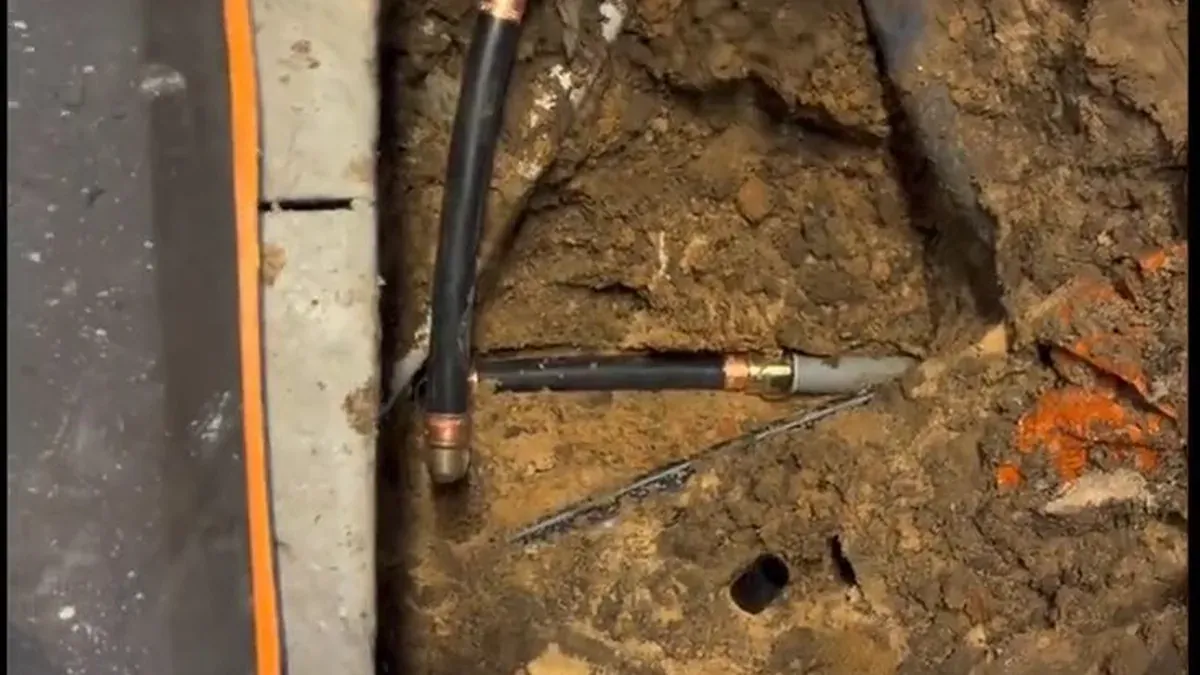
Replacement makes sense when the pipe, not one spot, is the problem. A second leak on the same run weeks after a repair is the classic sign. So is galvanized steel whose bore has narrowed with scale, which also starves the house of pressure.
| Finding | Usual direction |
|---|---|
| One break in otherwise sound pipe | Cut out the damaged piece and join in a new section |
| A second or third leak along the same run | Replace the whole run to the house |
| Scaled or corroded steel pipe | Replace the line, and look at the pipe inside the house too |
| Dull gray, soft pipe that shows bright metal when scratched | Treat as possible lead and plan a replacement |
| Pipe crushed or shifted by roots or vehicle weight | Replace the damaged length and reroute if needed |
Lead water service line replacement starts with identification. Lead is soft, dull gray and not magnetic. If you see pipe like that where the line enters the house, take a photo and show the plumber instead of scraping at it yourself. If several branches inside the house are failing as well, whole house repiping may be the cleaner scope.
Water line installation is its own job. A new run to a detached garage, an addition or an outdoor kitchen means a fresh trench, new fittings and a shut-off valve at the right spot. Ask the plumber whether the work needs a permit.
Before a trench, bore or drill, the crew must phone Arizona 811. Expect a wait of two full working days for the locators, then 15 working days of validity on the paint and flags they leave. Ask the plumber when the call went in, and let the start date follow from it.
High or low water pressure: is the regulator at fault, or the line?
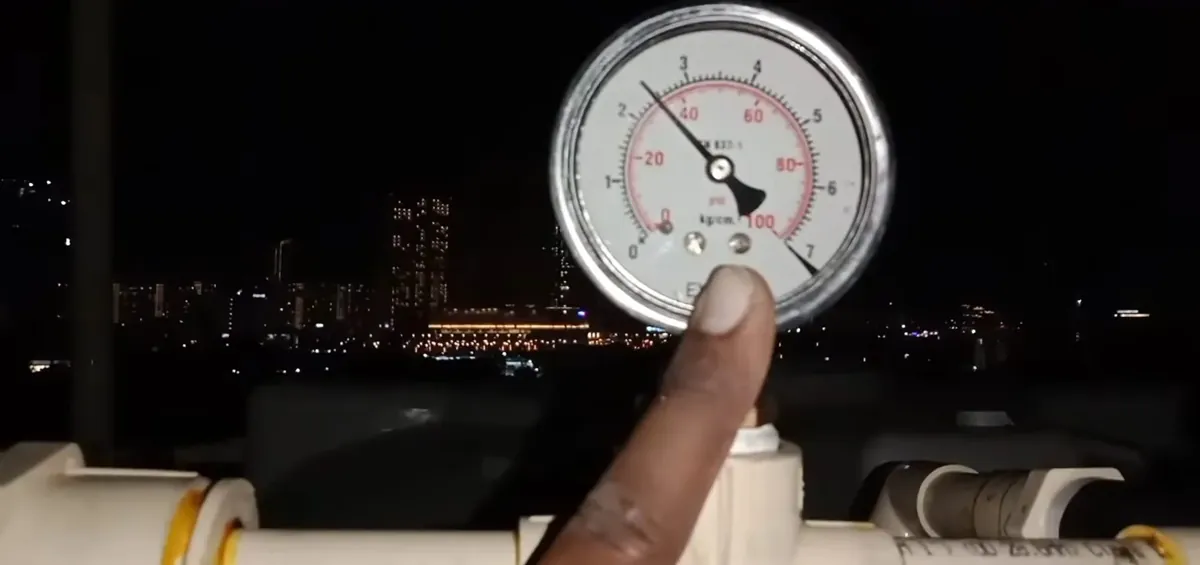
Low water pressure at every fixture, with a quiet meter, often comes from a partly closed shut-off valve, scale inside old steel pipe or a tired regulator. A plumber for water pressure starts at the house valve, confirms it is fully open, then reads pressure with a gauge threaded onto a hose spigot. Weak flow at a single fixture points to that fixture, not the line.
High water pressure shows up as banging pipes, a relief valve that weeps and faucets that wear out early. The PRV, or pressure regulator, is a bell shaped brass valve near where the line enters the house, and it steps street pressure down to a level fixtures can take. When it fails, pressure creeps up, and replacing it does not touch the buried line.
High pressure hydro jetting is a drain cleaning method and does not apply to supply pipe, so if that is what you were searching for, see clog removal.
If a pipe is spraying or water is flooding a room, close the main shut-off valve at the house and call dispatch. Do not adjust or remove a regulator, and do not dig around a suspected leak. Digging near buried lines can hit pipe or cable.
What should you ask and check before a plumber opens the ground?
A line job is mostly decided before the shovel comes out, so the questions matter more than the equipment. Arizona requires a licensed contractor when work passes the Registrar of Contractors dollar limit or needs a municipal permit. Search the contractor on the ROC site on the day you sign and confirm the license is current. Before the visit, request the license information for the assigned plumber through dispatch.
- Is this a section repair or a full run replacement, and what did you see that decided it?
- Where will the trench run, and how will the lawn, walkway or driveway be restored?
- What pipe material and size will go in?
- Has Arizona 811 been called, and for what date?
- Does the job need a permit, and who pulls it?
- How long will the water be off?
Check your paperwork for a line warranty too. The City lists one voluntary third party program for water and sewer lines, says it does not run it, and notes that its mailers are not City bills. If you hold a policy, call the provider before authorizing work.
Smaller questions that come up
What if the leak is at the meter box itself?
The meter and its box are generally utility equipment, so the call goes to the utility on your bill, not to a plumber. A plumber becomes the right call when the water is on the house side of the meter.
Can I repair the yard line myself?
Small fixes still involve digging, an 811 call and sometimes a permit. Joints made without the right fittings tend to fail again under pressure. Ask the dispatcher what the plumber would do before you decide.
Why is the water turned off during the work?
The plumber cannot cut into a live line. The house valve is closed, and sometimes the supply is shut off further upstream. The plumber can tell you how long to plan for.
What shapes the numbers on a line job is laid out in the cost guide.
Will a plumber replace the water main in the street?
No, the main in the street is not a plumber's job. Street lines are maintained by the City of Avondale only as far as the property line, so a break out there goes to the City through 311, or to the utility named on your bill. A plumber takes over once the pipe is on your lot, including the run to the house. If you cannot tell which side the water is on, read the meter first and give the dispatcher both readings.
How do I check whether my water service line is leaking?
Start with four observations. 1) Walk the line from the meter to the house and look for ground that is soft, sunken or green in dry weather. 2) Listen at the house valve for hissing. 3) Read the meter before bed and again in the morning with nothing running. 4) Photograph the spot and the readings. One caution: do not dig or probe the soil to find the pipe, because buried lines and cables sit shallow in places.
What happens if I think my water line is lead and I want it replaced?
Tell the dispatcher what you saw and the plumber will confirm the material. Picture a homeowner who spots dull gray pipe at the wall that shows bright metal under a light scratch and does not attract a magnet. The plumber checks the pipe, plans the route and the connection point, and gives a written estimate for the whole job, after that visit and not before it.
There is no water at the house. What should I do now and what can wait?
Do now: check whether a neighbor or other taps are dry too, confirm the house valve is fully open, and look at the meter for movement. If the whole street is affected, call the utility on your bill. If the valve is open and the meter spins, call dispatch because a break is likely. Can wait: a steady but weak flow, a worn regulator you suspect, or planning a full line replacement. Those can be booked for a regular visit.
Describe the wet spot and let dispatch place the call
Call (623) 323-3182 and tell the dispatcher what the meter and the yard are doing. A plumber is matched to the job and takes it from there.
Call (623) 323-3182