
Home>Services>Tankless Water Heater
Tankless water heater serviceError code or cold water? Tankless water heater repair, flushing and installation in Avondale, AZ
Your shower turns lukewarm after a minute, the display flashes an error code, or an aging tank is failing and you wonder whether an on demand unit is the smarter swap. A tankless water heater needs a plumber who knows gas, venting and scale, not only tanks. Call (623) 323-3182 and our dispatch line routes you to a plumber serving Avondale who can repair, flush or install the unit.
now
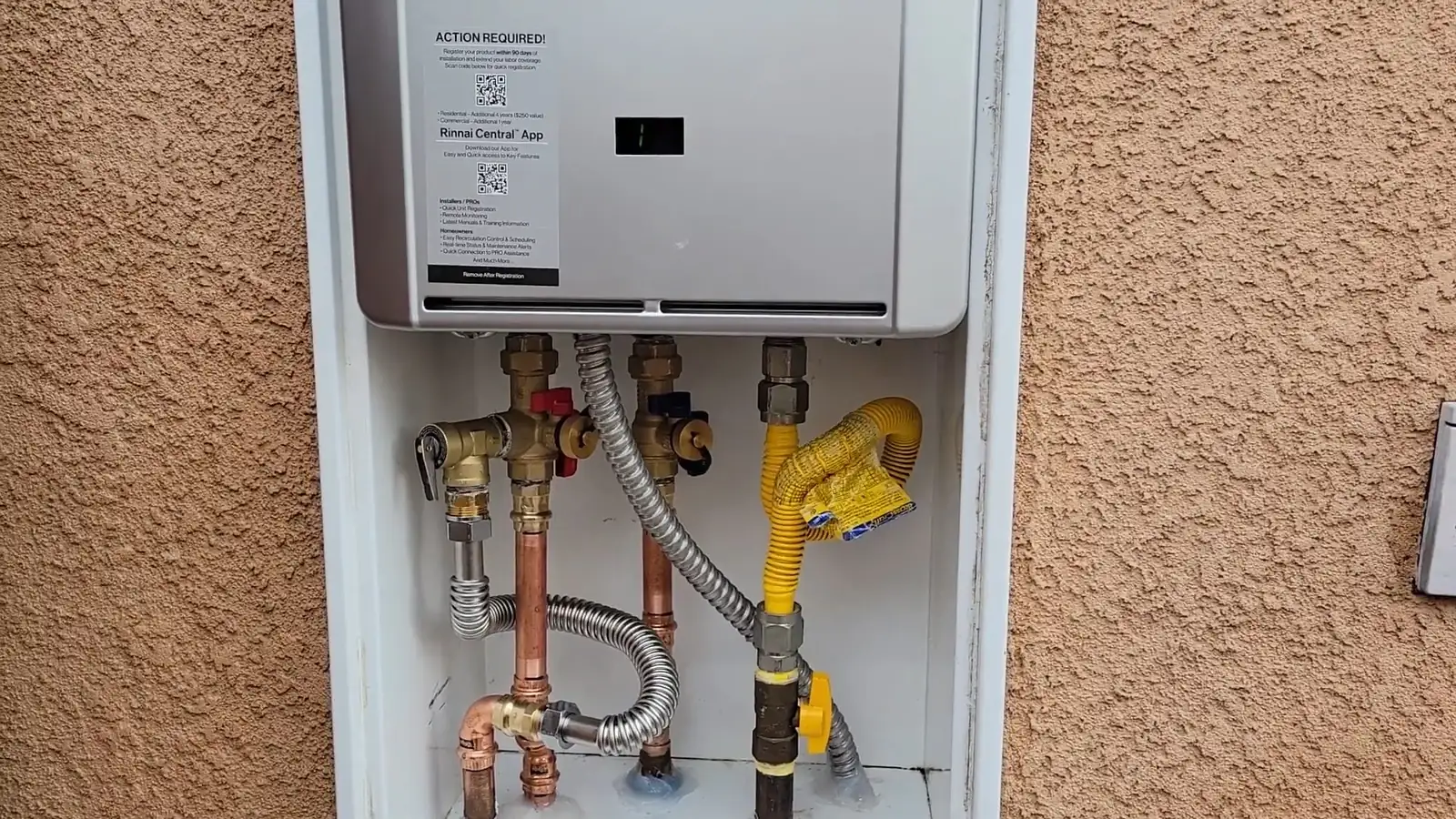
The decision comes first: keep a tank, move to tankless, or fix the tankless unit already on your wall? Each answer sends the plumber to a different job. A repair starts with a fault code. A flush starts with scale. A swap starts with your gas line, your vent and the wall space.
This page follows those jobs in the order most homeowners meet them. It covers flushing, repair and troubleshooting, installation, and replacement or conversion from a tank. Short answers on tank versus tankless, gas versus electric units and brands sit along the way.
One more thing to settle early. Some plumbers will replace a tankless unit but will not work on it. When you call, say plainly that the heater is tankless and ask whether the plumber services that type.
Is scale making your tankless water heater run cold or loud?
Scale is the usual reason a tankless unit slows down. Avondale tap water is hard, and minerals bake onto the heat exchanger each time the burner or element fires. The passages narrow, flow drops and the unit starts to overheat. You notice lukewarm water, a rumbling or popping sound, or a code that returns after every reset.
A tankless water heater service is a descale flush. The plumber isolates the unit with its service valves, runs a mild acid solution through the heat exchanger with a small pump, rinses it out and cleans the inlet screen. If your unit has no service valves, the plumber adds them first so the flush is possible. Ask about that when you book.
Flushing is maintenance, not repair. If the unit already leaks or locks out, have a plumber look at it before any flush, since acid pushed through a cracked exchanger makes a small fault larger. Many owners schedule the flush ahead of trouble, the same way you tune up a car.
| What you notice | What it often points to | What to say when you call |
|---|---|---|
| Hot water fades to lukewarm | Narrowed heat exchanger passages | The unit has never been flushed, or not in years |
| Popping or rumbling while it runs | Scale flaking and trapped water boiling | The sound started recently and gets louder |
| Same code returns after a reset | Overheating from poor flow | Write down the code and the model number |
| Weak flow at one tap only | A clogged aerator, not the heater | Other taps run normally |
Hard water and your heater
The City of Avondale publishes water quality reports for residents. Treat the water as hard: expect scale in water heaters, tankless units and fixtures, and ask the plumber how often your unit should be flushed. Ask too whether treatment makes sense for your home, which the water softener and filtration page explains.
Sources: City of Avondale 2017 water quality report. Checked 2026-10-30.
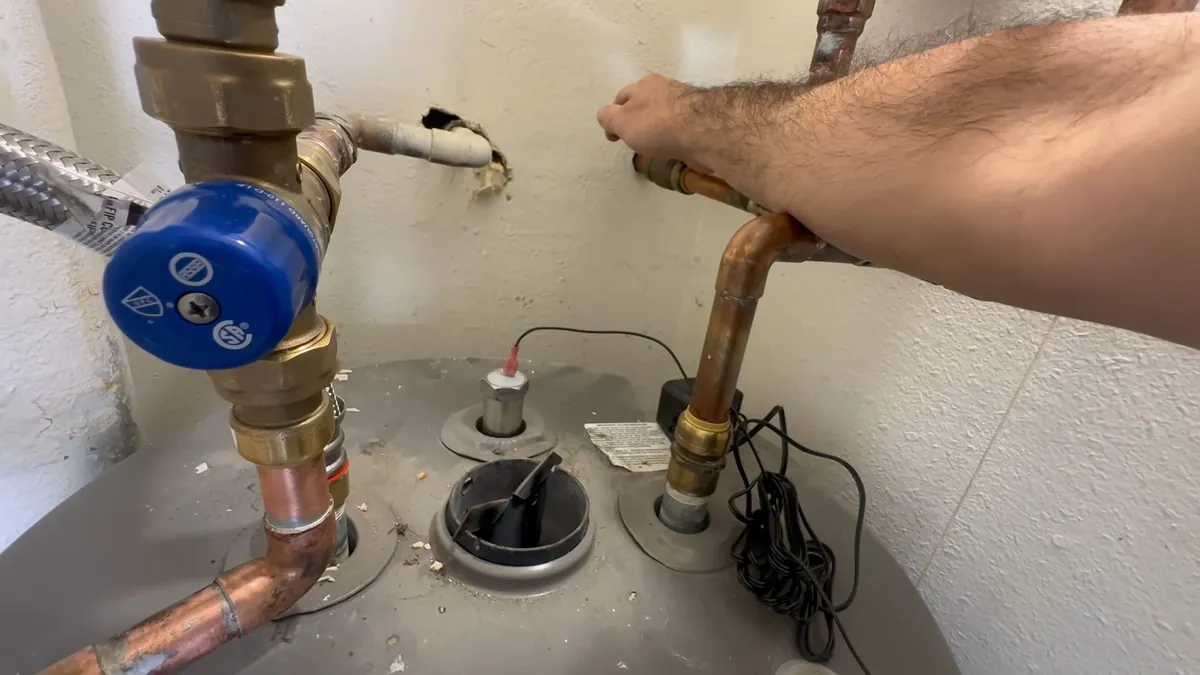
Tankless water heater repair: error codes, cold water and leaks
Tankless repair covers a short list of faults. Fault codes point to ignition, sensor, venting or flow trouble. No hot water at all can mean a tripped safety switch, a lost gas or power supply, or a clogged inlet screen. Cold bursts, where hot water runs cold for a few seconds, often come from low flow or a sensor that reads wrong.
A plumber for tankless water heater problems begins with the code and the model number, then tests the parts that code names. Burnt sensor wiring, a failed igniter, a blocked vent and a scaled exchanger each leave a different pattern. Codes differ by brand, so the manual or the plumber decides what a code means, not a guess from another model.
A tank and tankless repair visit differs mainly in the parts. Tankless units need brand specific components, so ask early whether the plumber can get them. A leak at a pipe connection is often a quick fix. A leak from inside the cabinet can mean a cracked heat exchanger, and that points toward replacement.
Write down the code
Note the number on the display, any beeping and the model name on the label. The plumber can plan parts before arriving.
Check where the problem shows
Test hot water at two or three taps. If only one tap runs cold, the heater is probably fine.
Stop the water if it leaks
Close the cold supply valve to the unit and keep people away from wet electrical parts. Do not open the cabinet.
Call with the details
Tell the dispatcher it is a tankless unit, give the code and say whether it runs on gas or electricity.
An error code is a clue, not a diagnosis, and a code reset does not fix the cause. If you smell gas, get everyone out, leave switches alone, and phone 911 and the gas utility once outside. Do not take a unit apart yourself, because burner, vent and wiring faults are hazards.
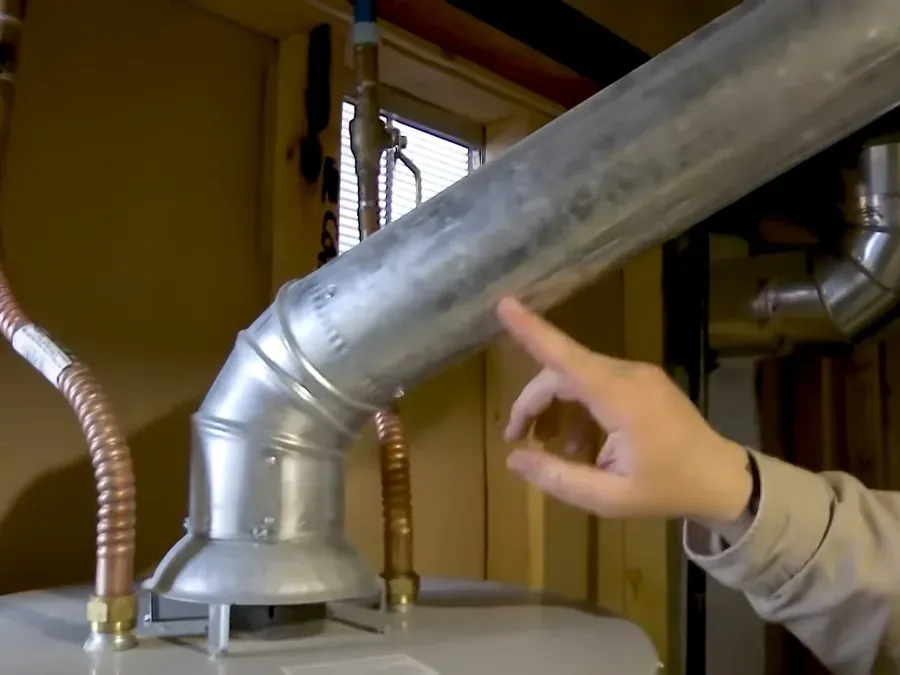
Plan a tankless installation around your gas supply, vent and wall space
Tankless installation is rarely a one for one swap. A gas unit often needs a larger gas line than a tank did, because it burns a lot of fuel in a short burst. It also needs a vent made for its exhaust, and clearance for that vent. Electric units skip the vent but draw heavy power from the panel. The plumber checks all three before quoting.
For the installation of tankless water heaters, ask the plumber to look at the gas line size and run, the vent route, the electrical capacity and the spot on the wall. If the gas line must be upgraded, that work is covered on the gas line installation and repair page. The plumber also removes the old tank and caps or reroutes what it leaves behind.
Sizing matters as much as hardware. A unit sized for one bathroom struggles when a shower, a dishwasher and a washer run together. Tell the plumber how many people live in the home and which fixtures run at once, so the unit matches real use.
- Is the existing gas line big enough, or does it need to be upgraded?
- Where will the vent run, and what clearances does it need?
- Does the unit run on gas or electricity, and why is that the right pick for this house?
- What flow does the unit deliver when two fixtures run at once?
- Will service valves be installed so the unit can be flushed later?
- Who removes the old tank and handles its disposal?
- What does the warranty cover, and who services the unit afterward?
Before you agree to a unit, ask the plumber to name the gas line size and vent route in writing. Vague answers here are the usual source of surprises later.
Tankless or another tank: which fits your household?
The tankless vs tank water heater question comes down to how you use hot water and what your house can support. A tank stores a batch and reheats it, so it can run out during back to back showers. A tankless unit heats as water flows, so supply is steady until you ask for more than its flow rating.
Neither type removes the hard water issue. Both collect scale, which is why a tank needs draining and a tankless unit needs flushing. Brand is a smaller decision than fit: pick a model the plumber can service and source parts for, and ask which brands the plumber works on regularly.
Gas or electric is the other fork. Gas units suit homes with a strong gas supply and a vent path. Electric units suit homes where venting is hard but the panel has room. For repair or swap help on a conventional tank, see repair instead of replacement and replacing a water heater.
| Question | Tank water heater | Tankless water heater |
|---|---|---|
| How is hot water supplied? | From a stored batch that can run out | Heated on demand, limited by flow rating |
| Space needed | A floor spot or closet for the tank | A small wall mounted unit |
| Gas and vent needs | Standard gas line and flue | Often a larger gas line and special vent |
| Maintenance | Drain and check the anode rod | Flush to remove scale |
| Failure sign | Leak from the tank body | Error codes, cold bursts, scale noise |
| Suits you when | The house has simple gas and little space to modify | The house can support the gas or power load and you want steady supply |
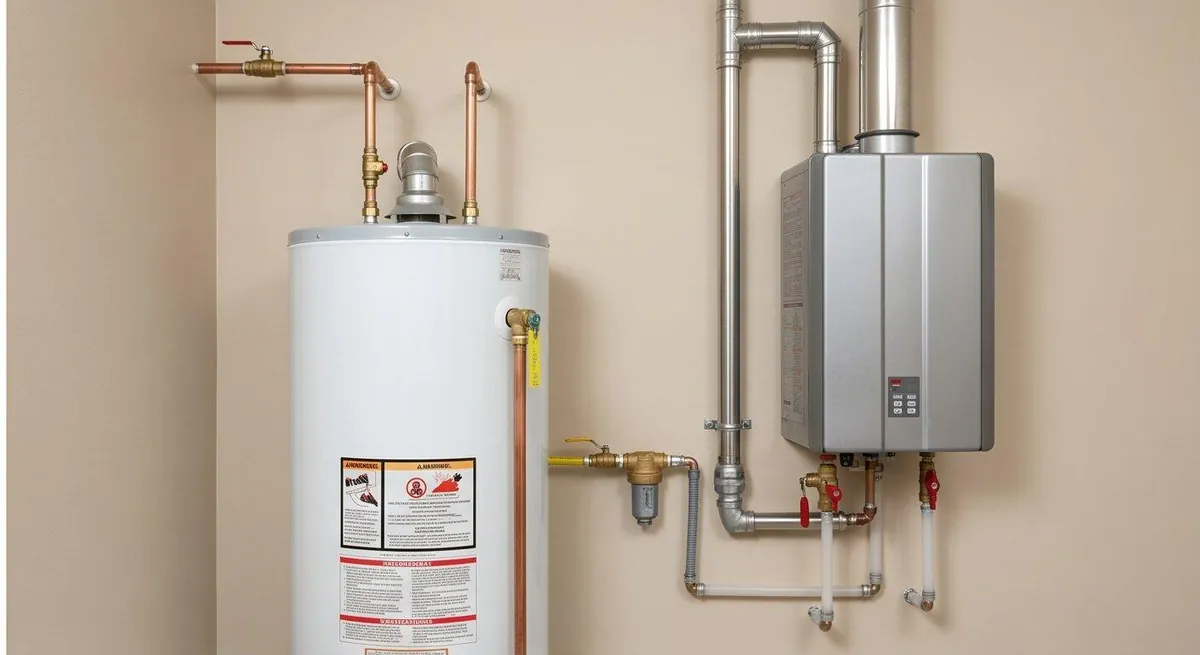
Repair or replace a tankless unit that is getting old?
Repair makes sense when one part has failed and the heat exchanger is sound. A bad sensor, igniter or inlet screen is a small fix on a unit that otherwise works. Replacement makes sense when the exchanger leaks, the same faults return after repair, or the manufacturer no longer supplies parts for an older model.
Tankless water heater replacement of an existing tankless unit is usually easier than a first conversion, because the gas line, vent and mounting are already in place. Converting from a tank is a bigger job, since the gas line, vent and electrical supply may all need changes. The plumber should explain which case you are in before work starts.
More detail before you decide
What is different about converting from a tank?
The plumber removes the tank, installs the wall unit and often reworks the gas line and venting. Expect the plumber to check the electrical supply too, even on a gas unit, since many need a small power connection for the controls.
Can I choose a different fuel type when I replace?
Sometimes. Switching between gas and electric changes the gas line, the vent and the panel load, so it is a larger project. Ask the plumber what the swap would involve and whether your house supports it.
What if the unit is old but still works?
A working old unit still collects scale and loses efficiency. A flush and inspection tells you whether the exchanger is healthy. Many owners decide on replacement only after the plumber shows what the flush turned up.
Do I need the same brand when I replace?
No. A different brand may need different venting or gas connections, so ask the plumber what changes. Pick a model that a local plumber can service.
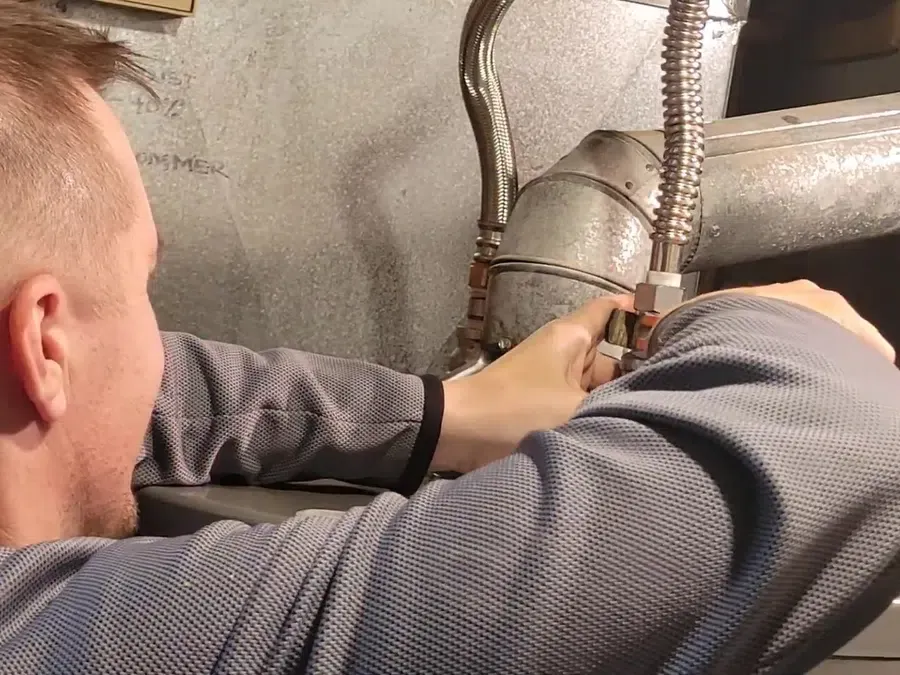
Who should do the work, and how do you check the license?
Plumbers reached through the dispatch line are independent contractors, and you hire the plumber, not the site. Before you sign anything, ask the dispatcher for the plumber's license details and look them up yourself. A current license matters most on larger jobs such as a gas line upgrade or a full unit replacement.
The state Registrar of Contractors offers an online search showing if a license is current. Run it on the day you sign, not the day you first talk, and make sure the name on the license matches the name on the estimate.
Check the license first
Larger jobs in Arizona must go to a licensed contractor, based on a dollar limit the state sets. State guidance is to look up the license before you agree to work. Use the contractor search and keep a copy of the result with your paperwork.
Sources: ROC online contractor license search. Checked 2026-10-30.
For what shapes the final figure on a tankless job, see the cost guide.
Should I replace my tank with a tankless water heater or keep a tank?
Choose tankless if your gas line, vent and wall space can support it and you want steady hot water for several people. Keep a tank if the house would need major gas or electrical changes, or if a like for like swap is what you want. A tank is easier to match to what you already have, while tankless asks more of the house. A plumber can look and tell you which one fits.
How often should a tankless water heater be flushed in Avondale?
Flush it on the schedule in the manual, and treat once a year as a reasonable starting point in hard water. Avondale tap water is hard, so scale forms on the heat exchanger and narrows the passages over time. Flow drops, the unit works harder and codes appear. A plumber can tell you whether your unit needs more or less often after seeing what the first flush removes.
Does hard water change the tankless vs tank decision in Avondale?
Avondale water is hard, so either type will collect scale, and the choice should not hinge on that alone. A tank collects sediment that you drain away. A tankless unit builds scale inside a narrow heat exchanger, which you flush with a solution. Either way, ask the plumber about scheduled maintenance, and ask whether a softener or filter would protect the heater and your fixtures.
How do I compare a tankless and a tank water heater for my house?
Work through four checks. First, count the people and the fixtures that run together. Second, ask a plumber whether your gas line and vent suit a tankless unit. Third, compare the space, since tankless hangs on a wall. Fourth, ask who will flush and service it. One caution: do not pick on paper alone, because the gas line and vent decide what is possible.
Talk to a plumber about your tankless water heater
Tell the dispatcher whether you need a flush, a repair or an installation. Call (623) 323-3182 and a plumber will be sent to you.
Call (623) 323-3182