Home>Services>Repiping & Pipe Repair
Repiping and pipe repairPinhole leaks or a burst pipe? Repiping and whole-house pipe replacement in Avondale, AZ
A pipe split in the wall, a brown stain spreading across a ceiling, or a third pinhole leak in a month: each one raises the same question. Fix this spot or replace the lines? Call (623) 323-3182 and our dispatch line routes you to a plumber serving Avondale who can look at the pipe, name the material and explain which route fits your house.
now
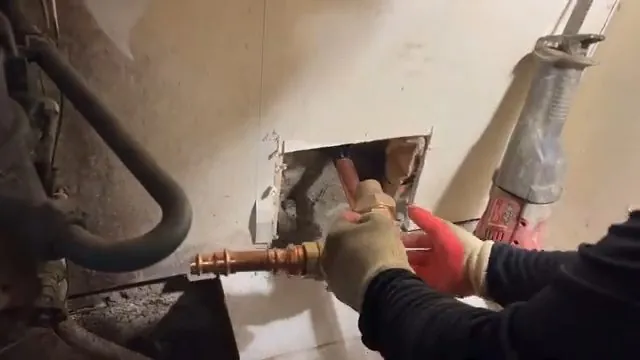
Repiping means replacing the water supply lines in a house with new pipe, either all of them or a full branch. Pipe repair means fixing one failed spot, such as a split section, a cracked elbow or a corroded joint, and leaving the rest in place.
Both jobs suit a homeowner whose pipes are leaking, whose water pressure has faded, or whose pipe material is known to fail with age. The right choice depends on what the pipe is made of, how many spots have failed, and where the lines run. This page walks through those decisions in the order you will face them.
Repair a pinhole leak or repipe the whole house?
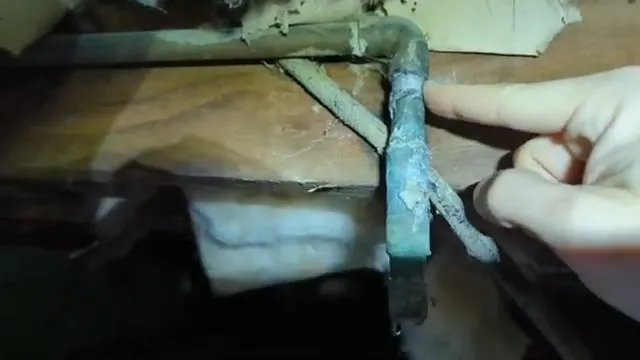
A pinhole leak is a tiny hole, often in copper, that sprays a fine mist or leaves a damp patch on drywall. One pinhole in an otherwise sound line is a repair job. The plumber cuts out the damaged section and joins in new pipe, and the rest of the system stays as it was.
Repiping becomes the better choice when the failure is a pattern. A second leak in the same run, then a third, usually means the pipe wall is thinning along its whole length. Patching one spot only moves the pressure to the next weak point. Ask the plumber to show you the cut section so you can see the inside of the pipe for yourself.
Call soon if you see more than one of the signs below. A repair that fails again after a few weeks tells you the line, not the fitting, is the problem.
- Two or more leaks in the same run of pipe within a year
- Water that comes out brown or rusty first thing in the morning
- Pressure that has dropped at several fixtures, not just one
- Green crust, white scale or pinhole sprays at copper joints
- Damp drywall, a warped baseboard or a musty smell with no visible drip
If the damp spot is near a fixture and you are not sure where the water starts, a leak detection visit can locate the source before anyone opens a wall.
Is the pipe polybutylene, galvanized, copper or something else?
The material decides almost everything: whether a repair will hold, what the replacement should be, and how much wall has to open. You can often identify a pipe by looking at an exposed stretch near the water heater, under a sink or at the main shut-off, without touching anything.
Galvanized steel is gray, threaded at the joints and attracted to a magnet. It rusts from the inside, so the opening narrows and pressure drops long before a leak shows. If you want galvanized pipe replacement, the plumber will usually propose a full run, because a new section joined to old rusted steel fails again at the join.
Polybutylene is flexible gray, blue or black plastic that tends to fail at its fittings, often with little warning. It is a common reason to repipe a whole house rather than patch it. Cast iron, PVC and CPVC also turn up in older plumbing. Cast iron and PVC are mostly drain materials, while CPVC carries hot and cold supply and can turn brittle and crack at fittings.
| Material | What you will see | How it usually fails | Typical route |
|---|---|---|---|
| Galvanized steel | Gray, threaded joints, magnet sticks | Rust narrows the bore, pressure fades, brown water | Replace the full run |
| Polybutylene | Flexible gray, blue or black plastic, crimp rings at fittings | Splits at fittings, often with no warning | Repipe the house |
| Copper | Reddish brown, soldered joints, green crust when corroding | Pinholes, joint leaks, thin walls over time | Spot repair or repipe if repeated |
| CPVC | Cream or off-white rigid plastic | Cracks at elbows and fittings as it ages | Replace affected branches |
| PEX | Flexible red, blue or white tubing with metal or plastic fittings | Fitting leaks, or damage from sun and impact | Repair the fitting or swap a section |
| Cast iron and PVC | Heavy dark iron or white rigid plastic, mostly drains | Cracks, rusted joints, root entry | See the drain page |
A look at one exposed pipe does not prove every line in the house is the same material. Older homes often mix materials after past repairs. Ask the plumber to check several points, and do not cut into or scrape a pipe yourself.
Burst pipe: what do you do in the first minutes?
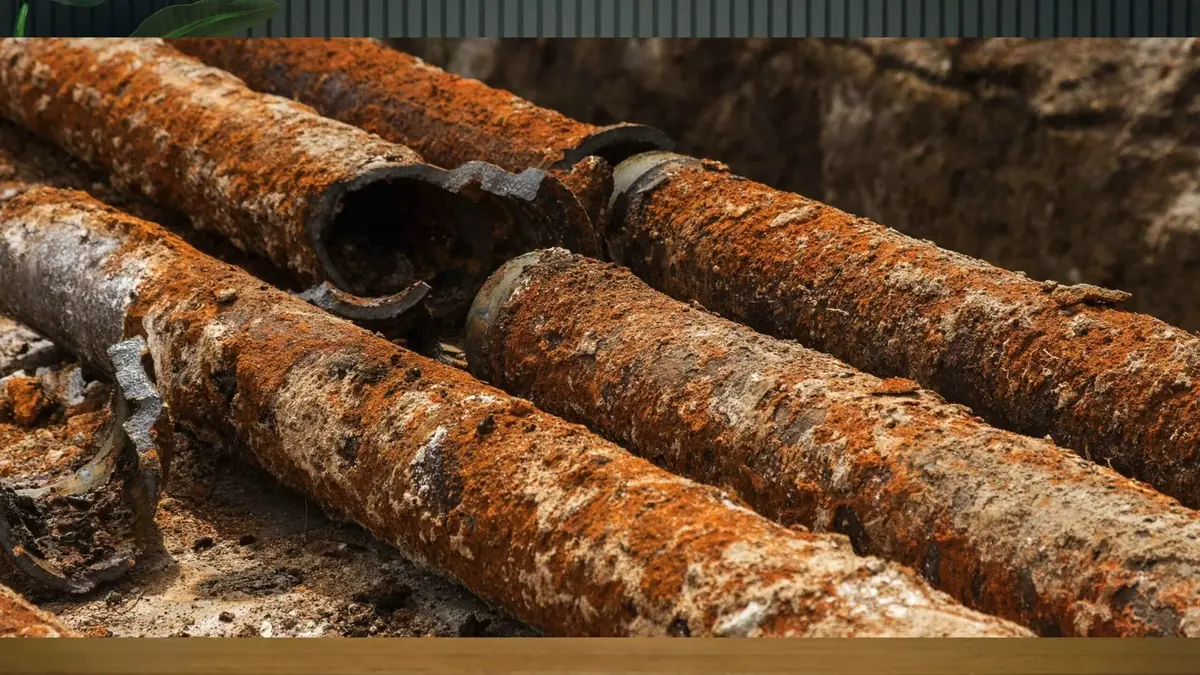
A burst pipe is a split or broken line that releases water faster than a drain can carry it. Pressure, corrosion, a failed fitting and an exposed line that froze can all cause one. The first minutes look the same in every case, and what you do in them limits the damage before the plumber arrives.
Stopping the water comes first, and everything else follows from it. Once the flow is off, the plumber can open the area, find the break and decide between a quick fix and a larger replacement. A burst pipe repair often starts as a section swap and grows into a longer run when the nearby pipe turns out to be just as worn.
Not sure who owns the problem? Read your water bill. Most of Avondale is served by City of Avondale Water Services, while some northwest acreage is served by Liberty Utilities. If water is surfacing at the street side of the meter rather than inside the house, that utility is the one to call, and a water line plumber handles the pipe on your side.
- Close the main water shut-off, usually at the house wall or at the meter box. Turn it fully.
- Open a faucet at the lowest point of the house to drain the pipes and relieve pressure.
- Move belongings away from the wet area, and photograph the damage for your records.
- Call the dispatch line and tell the dispatcher where the water is showing and whether it has stopped.
- Leave the wall, ceiling or floor as it is unless water is pooling and you can safely mop or sweep it away.
If water is reaching outlets, appliances, a light fixture or the electrical panel, stay out of the wet area and call 911. Do not touch switches or cords. If you smell gas, leave the house and call the gas utility from outside. Neither problem is a do-it-yourself fix.
Copper or PEX, and which walls get opened?
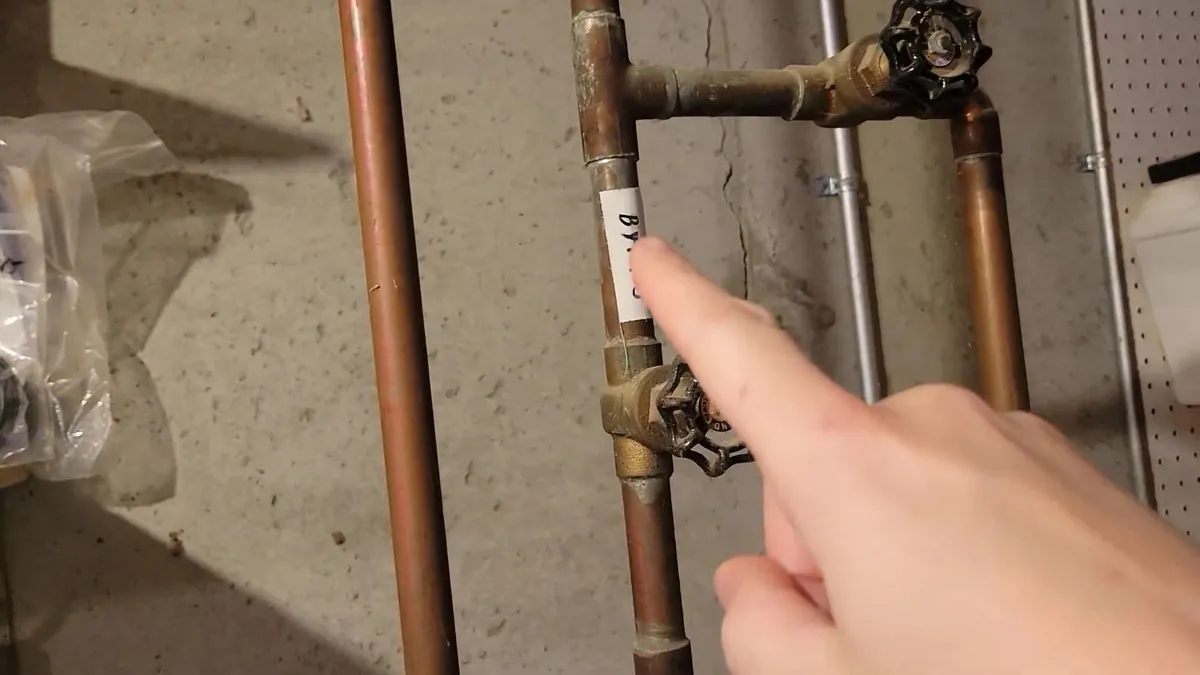
Copper repiping is the traditional route. Copper is rigid, soldered at the joints and long lived when the water chemistry is kind to it, but it takes more labor to run and is more likely to need wall openings at corners. PEX is flexible tubing that bends around obstacles, so it often needs fewer and smaller openings. Both are accepted materials, and a plumber can explain why one suits your layout.
Ask which route the new pipe will take. Many houses are replumbed through the attic and down inside interior walls, with openings at fixtures and manifold locations. Others run lines through a crawl space or along a garage ceiling. Each route changes how much drywall is cut and who patches it.
For a failed copper section, copper pipe repair with a new coupling or a short section is common when only one spot has gone. PEX installation is also used for partial jobs, such as replacing one bathroom branch while the rest of the copper stays.
Questions that settle the choice
Who patches and paints the walls?
Repiping usually means cutting small access holes. Ask whether the plumber patches the drywall, only closes the holes, or leaves finishing to you or a separate trade. Get the answer in writing before work starts.
Where will the shut-offs and manifold sit?
Ask the plumber to show where the new main shut-off and any branch valves will be. A shut-off you can reach in the garage or utility closet matters the next time something leaks.
Can the work be done in stages?
A partial job can replace the worst branch first, such as a kitchen and bath run, then leave the rest for later. Staging helps if the house cannot be without water for long, but ask what the plumber expects to find in the untouched lines.
Will the old pipe be removed or left in the wall?
Dead pipe is sometimes abandoned in place and capped. Ask where the caps will be and whether any old galvanized or polybutylene stays behind the drywall.
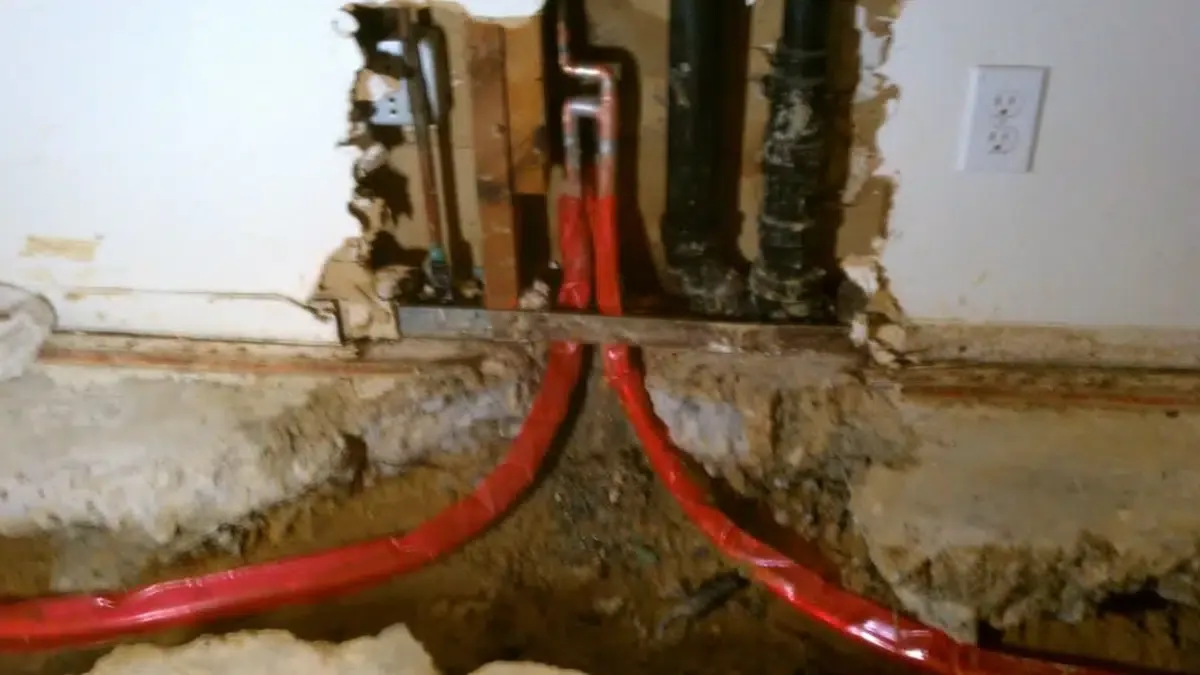
Pipe replacement or pipe repair: where does a permit come in?
Pipe replacement swaps a section or a whole run for new material. Pipe repair fixes the failed spot and leaves the pipe in place. The line between them matters because of the permit rules, and a repair that quietly turns into a replacement changes who has to apply for what.
Underground pipe repair is the hardest version of this question. A supply or drain line that runs under a slab or buried in the yard can be reached by digging, by breaking a trench in the slab, or by running a new line through the walls and abandoning the old one. A slab leak plumber can confirm the leak is under the floor before anyone chooses a route.
If you have a broken drain rather than a supply line, the same logic applies, and a drain pipe repair page explains the options in more detail.
How the City treats repair versus replacement
Under the City's 2025 code amendments, a plumber may fix a leaking pipe, valve or fixture without a permit, as long as the job does not replace or rearrange any of them. Putting new material in place of concealed trap or drain pipe is treated as new work, so it requires a permit, applied for through the City's online portal.
The City's rules for whole-house repipes are not covered by that amendment summary, so ask the plumber directly whether your job crosses into replacement and who will pull any permit.
Sources: Avondale building code amendments (City document). Checked 2026-10-30.
What should a written repipe scope say?
A written scope turns a verbal plan into something you can compare and hold to. Ask for it before work begins, even if the leak is urgent. A clear scope names the pipe material, the sections being replaced, the access points and the finish work, and it separates what is included from what would be extra.
Check the license too. Arizona requires a licensed contractor for work above the Registrar of Contractors threshold or for work that needs a municipal permit, and the ROC search shows whether a license is current. Run that search yourself on the day you sign the scope, and request the plumber's license details from dispatch before the visit.
Inspect and map the lines
The plumber looks at the main, the water heater connections and each fixture, then notes the material and the condition at several points.
Shut off and drain the system
Water is turned off at the main and the old lines are drained so cutting can start without spray.
Open the access points
Small holes are cut in drywall at fixtures, corners and attic or crawl space transitions to reach the old pipe.
Run and connect the new lines
New pipe is run to each fixture and connected to the main, the water heater and the shut-offs, with the old line cut out or capped.
Pressure test before closing up
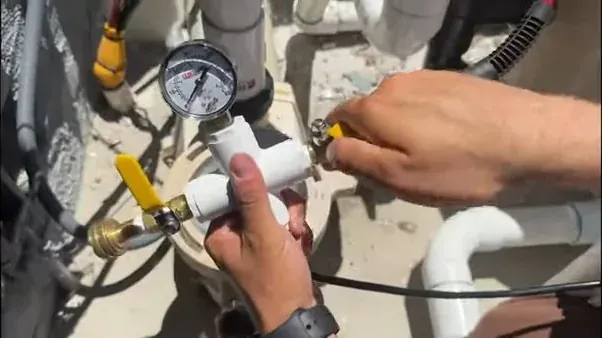
The new system is filled and held under pressure while the plumber checks every joint for seepage before any wall is closed.
Close, clean and review
Access holes are closed or patched as the scope states, debris is removed, and the plumber walks you through the new shut-offs.
Check the license before you sign
The Arizona Registrar of Contractors publishes a contractor search that shows whether a license is current. Run it close to signing, not weeks ahead.
Sources: Arizona Registrar of Contractors. Checked 2026-10-30.
For what drives the numbers on a repipe or a repair, see the cost guide.
When does a polybutylene house need a full repipe?
A full repipe is usually the answer once polybutylene is confirmed and a fitting has failed. Picture a homeowner who finds a wet patch behind a toilet, and the plumber discovers gray plastic pipe with crimp rings throughout. Fixing the one fitting leaves dozens of identical ones in the walls. Ask for the whole supply system to be assessed, then decide whether to replace everything or stage the work.
Does trenchless pipe lining replace repiping?
Not for supply lines. Lining coats the inside of a buried drain or sewer pipe with resin and mostly suits underground drains with cracks or root damage. Right now, shut off the water to any broken line and keep fixtures off. What can wait is the choice between lining and digging, which the plumber can make after a camera inspection of the pipe.
How can I tell if my house has galvanized pipes?
Look for gray metal pipe with threaded joints and test it with a magnet, since galvanized steel attracts one and copper does not. The usual symptoms are weak pressure at several fixtures, brown water after the tap sits unused and flaking rust at joints. Rust builds up inside the pipe over time, so the plumber may recommend replacing the entire run instead of one piece.
Should I call for emergency service or book a normal visit?
Choose emergency service when water is flowing, soaking a wall or ceiling, or cannot be stopped at the shut-off. Choose a normal visit when the leak is slow, you have stopped it at a fixture valve, and the pipe is dry. Either way, close the main first. A dispatcher asks where the water is showing and sends a plumber based on that answer.
What do I do when a pipe bursts?
Close the main water shut-off right away, then open a low faucet to drain the lines. Stopping the flow protects floors, drywall and belongings while the plumber travels to you. If water has reached outlets or the electrical panel, stay out of the area and call 911. After that, photograph the damage and call the dispatch line to book a plumber.
Water showing where it should not be?
Shut off the main, then call (623) 323-3182 and the dispatcher will match you with a plumber for the repair or the full repipe. Have the pipe material and the location of the damage ready if you know them.
Call (623) 323-3182